



What's Happening?
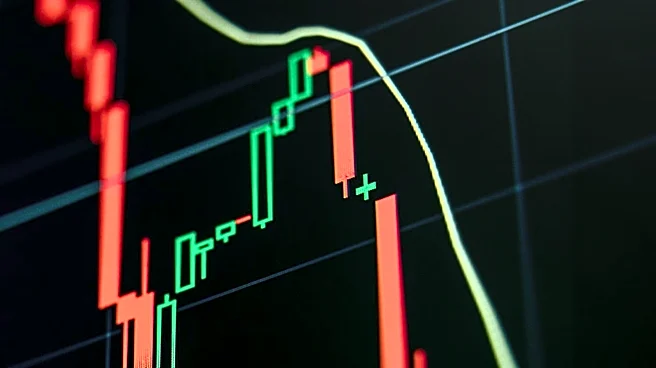
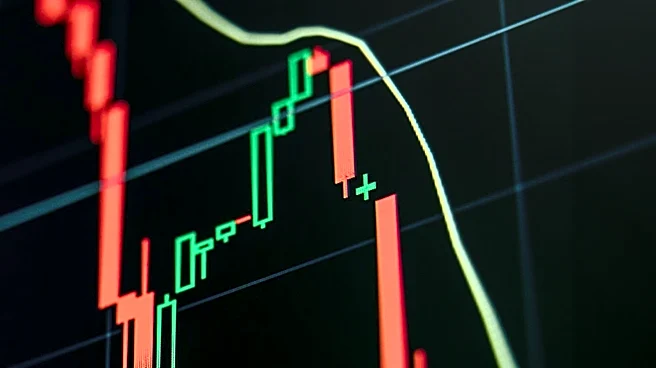
XRP, a prominent cryptocurrency, is currently experiencing a downward trend, trading near 90 cents, which is 53.6% lower than its price a year ago. Approximately 63.5 billion XRP tokens are in circulation out of a maximum supply of 100 billion, with Ripple
holding the remainder in escrow accounts that release tokens on a predetermined schedule. This increasing supply means that the same price now represents a higher market value compared to July 2025, when XRP reached its all-time high of $3.65. The cryptocurrency's market capitalization stands at $57.24 billion, positioning it as the sixth-largest cryptocurrency. Ripple CEO Brad Garlinghouse has suggested that some investors might be divesting their crypto holdings to invest in significant IPOs, such as Anthropic's. Data from SoSoValue indicates a decline in demand for Spot XRP ETFs, with cumulative net inflows dropping to $1.78 billion on November 20 from $1.81 billion on October 29, signaling outflows. Net assets in these ETFs also fell to $990 million from $1.51 billion on October 28, attributed to both outflows and XRP's falling price.
Why It's Important?
The current trajectory of XRP holds significant implications for investors and the broader cryptocurrency market. The declining price and increasing supply could erode investor confidence, particularly for those holding XRP as a long-term asset. The outflows from Spot XRP ETFs suggest a cooling interest from institutional investors, which can further depress prices and market sentiment. This trend also highlights the competitive landscape within the investment sector, where the allure of new IPOs like Anthropic's may draw capital away from established cryptocurrencies. Standard Chartered's ambitious price target of $28 by 2030, representing a potential 3,007% increase, underscores the speculative nature of cryptocurrency investments. Achieving such a valuation would require XRP's market cap to reach $2.8 trillion, a substantial leap from its current standing. The interplay between rising interest rates, which typically pull money from speculative assets, and the performance of cryptocurrencies like XRP, remains a critical factor for market participants to monitor.
What's Next?
The immediate future for XRP will likely be influenced by several key factors. A critical test for XRP is to regain the $1 price point, which would require an 11% increase from its current trading level. For this to occur, cumulative ETF inflows would need to reverse their trend and surpass the previous high of $1.81 billion. The Federal Reserve's monetary policy, particularly future interest rate decisions, will also play a significant role. Higher interest rates generally make speculative investments like cryptocurrencies less attractive, potentially diverting capital to more stable assets. Conversely, a stabilization or reduction in rates could provide some tailwind for XRP. The broader cryptocurrency market sentiment and the performance of competing investment opportunities, such as major IPOs, will continue to shape investor behavior towards XRP. The market will also be watching for any new developments from Ripple regarding its escrow releases and strategic initiatives that could impact token supply and demand.
Beyond the Headlines
Beyond the immediate price fluctuations, XRP's current situation highlights deeper trends within the digital asset ecosystem. The growing supply of XRP, even with tokens held in escrow, presents a continuous dilution factor that requires sustained demand to maintain or increase value. This dynamic is a fundamental challenge for many cryptocurrencies with large, pre-mined supplies. The declining interest in Spot XRP ETFs could signal a broader shift in institutional appetite for certain digital assets, potentially indicating a more selective approach to crypto investments. Furthermore, the competition for investor capital between traditional IPOs and cryptocurrencies underscores the increasing maturity and interconnectedness of global financial markets. The ambitious price targets set by financial institutions like Standard Chartered, while offering a long-term bullish outlook, also serve as a reminder of the high-risk, high-reward nature of the crypto market, where significant growth is often predicated on massive market capitalization expansion and widespread adoption.