






What's Happening?
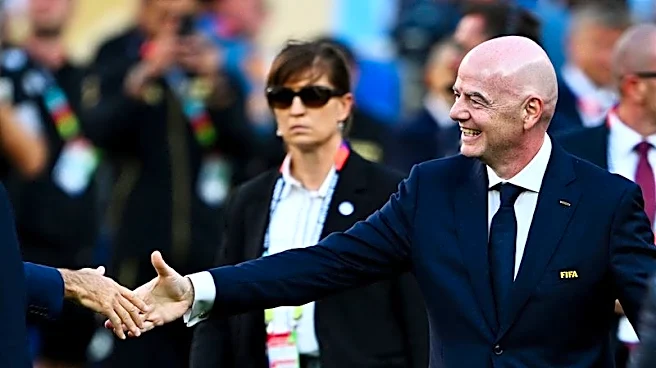
FIFA's leadership, under President Gianni Infantino, is facing criticism for a lack of transparency in its now-scrapped plan to sell minority shares in World Cup events to private investors. The plan, which was expected to generate significant revenue,
was met with opposition from UEFA and other football associations. Critics argue that the decision-making process lacked consultation and transparency, leading to a loss of confidence in FIFA's governance. The controversy has sparked discussions about the need for reforms within FIFA to ensure accountability and integrity in its operations.
Why It's Important?
The situation highlights the challenges facing FIFA in maintaining trust and transparency within its governance structures. The backlash against the investment plan underscores the importance of involving stakeholders in decision-making processes and ensuring that financial decisions align with the sport's values. The controversy could lead to calls for reforms within FIFA, focusing on improving transparency and accountability. The outcome of this situation may influence how FIFA approaches future financial decisions and its relationship with member associations.
What's Next?
FIFA may need to address the concerns raised by UEFA and other stakeholders by implementing changes to its governance structures. The organization could face increased pressure to ensure transparency and accountability in its operations. The upcoming elections for FIFA's presidency may serve as a platform for candidates to advocate for reforms and greater stakeholder engagement. The situation could also prompt broader discussions about the role of private investment in football and the need for clear guidelines to maintain the sport's integrity.