

What's Happening?
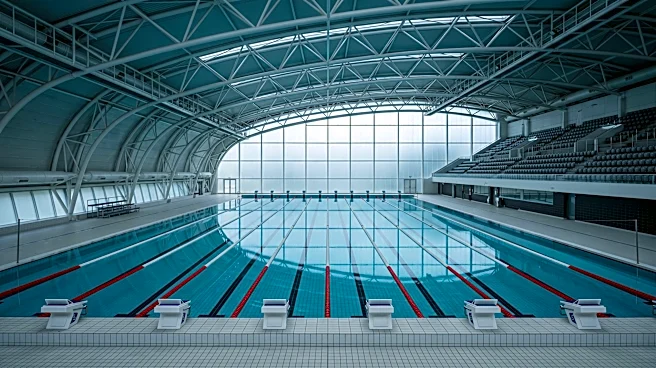
World record holder Cam McEvoy has provided insights into the strategic decision-making behind breathing, or the lack thereof, in the 50m freestyle event. This race is the shortest and fastest in swimming, with elite finals typically lasting between 20-22
seconds for men and 23-25 seconds for women. McEvoy explains that in a race often decided by milliseconds, every element, including the start, underwater phase, stroke rate, body position, and final touch, must be optimized to save time. Some swimmers choose not to breathe at all during the 50m race to avoid changes in body position that could create additional drag. This tactic is a critical factor in gaining a competitive edge, as even tiny margins can determine the outcome among the world's fastest swimmers.
Why It's Important?
McEvoy's explanation sheds light on the intricate details and strategic thinking that define elite-level swimming, particularly in sprint events. For U.S. swimming programs and coaches, understanding these nuanced tactics is crucial for training athletes to compete on the global stage. The emphasis on minimizing drag and optimizing every fraction of a second highlights the scientific and physiological advancements in sports performance. This insight can influence coaching methodologies, training regimens, and even technological developments in swimwear and pool design aimed at reducing resistance. For aspiring U.S. swimmers, it underscores the dedication required to master not just speed and strength, but also the subtle technical aspects that can make the difference between winning and losing at the highest levels of competition, including future Olympic Games.
What's Next?
Following McEvoy's detailed explanation, it is likely that U.S. swimming coaches and athletes will further analyze and integrate these breathing strategies into their training programs, especially for 50m freestyle specialists. Research into optimal breathing patterns and their physiological impact during short-distance sprints may intensify. Athletes will continue to experiment with and personalize their race plans, determining whether a no-breath approach or a single, strategically placed breath yields the best results for their individual physiology. This ongoing refinement of technique will be critical as U.S. swimmers prepare for upcoming national and international competitions, including the Olympic Games, where such marginal gains can be decisive in securing medals.
Beyond the Headlines
The discussion around breathing in the 50m freestyle extends beyond mere technique; it delves into the extreme physiological demands placed on elite athletes. Holding one's breath for the entire duration of a high-intensity sprint requires exceptional anaerobic capacity and mental fortitude. This practice highlights the fine line between maximizing performance and pushing the human body to its absolute limits. It also raises questions about the long-term health implications of such intense, breath-holding efforts, though for a short duration like 20-25 seconds, it is generally considered safe for trained athletes. Furthermore, it exemplifies the constant innovation and adaptation within sports, where athletes and coaches continuously seek new ways to gain an advantage, often by challenging conventional wisdom and pushing the boundaries of human capability.