



What's Happening?
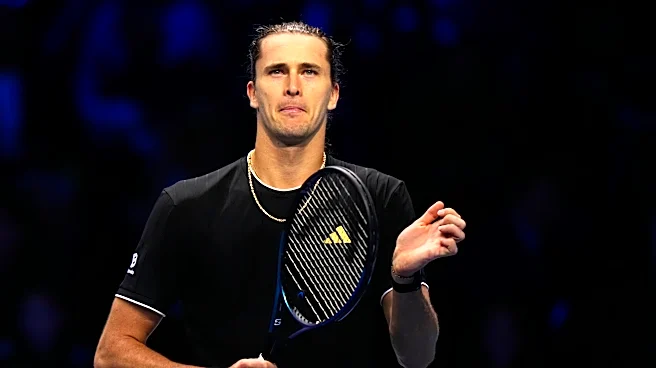
Germany's Alexander Zverev, the current world No. 1 in men's tennis, is facing criticism regarding his top ranking, particularly due to his losing record against other top-10 players and the extended absences of rivals Jannik Sinner and Carlos Alcaraz.
Zverev, who ascended to the No. 1 spot on November 2, has won two Grand Slam tournaments this season (French Open and US Open) and reached the Wimbledon final. However, he has lost nine of his 12 matches against top-10 opponents this year, securing only three victories. During the ATP Finals in Turin, Zverev addressed these criticisms, sarcastically attributing six of his losses to Jannik Sinner, whom he described as 'a robot, not a human being,' and one to Carlos Alcaraz. He acknowledged that his position comes with qualifications given the injuries to Sinner and Alcaraz but maintained that he has had the best season over 12 months.
Why It's Important?
This situation highlights the ongoing debate within professional tennis regarding the validity of rankings when top players experience injuries or inconsistent performance against their peers. Zverev's defense of his ranking underscores the pressure and scrutiny faced by athletes at the pinnacle of their sport. The discussion around his performance against top-10 players, particularly Sinner and Alcaraz, could influence public perception and future narratives surrounding his career. For the sport itself, it raises questions about how injuries to key players impact the competitive landscape and the perceived legitimacy of the world No. 1 title. The ATP's ranking system, which rewards consistent performance over a 12-month period, is implicitly being tested by these circumstances, affecting how fans and analysts evaluate player dominance.
What's Next?
Zverev is set to continue his campaign at the ATP Finals in Turin, where his performance will be closely watched, especially in matches against other highly-ranked players. His ability to secure further victories and potentially win the tournament could either solidify his claim to the No. 1 ranking or intensify the criticism. The return of Jannik Sinner and Carlos Alcaraz to full fitness in the upcoming season will also be a significant factor, as their presence will provide a clearer measure of Zverev's standing against a fully competitive field. The ongoing discussion about the ATP ranking system and its reflection of true dominance is likely to persist, influencing future tennis seasons and player rivalries.
Beyond the Headlines
The controversy surrounding Zverev's No. 1 ranking touches upon broader themes of athletic achievement, public expectation, and the psychological toll of constant scrutiny. His sarcastic remarks about Sinner being a 'robot' reveal a human element of frustration and the immense pressure athletes face to justify their success. This situation also subtly questions the narrative of 'best player' in a sport where individual performance is paramount, but external factors like injuries to rivals can significantly alter the competitive landscape. It highlights the subjective nature of greatness in sports, where statistics and rankings often clash with perceived dominance and head-to-head records against top competitors. The debate could also spark discussions on potential adjustments to ranking systems to better account for periods of injury or exceptional performance by a few dominant players.