










What's Happening?
McKinsey has emphasized the need for a $2 trillion investment to rebuild the U.S. industrial base, focusing on reducing trade dependencies and enhancing manufacturing resilience. The report outlines that the U.S. imports approximately $3 trillion in manufactured
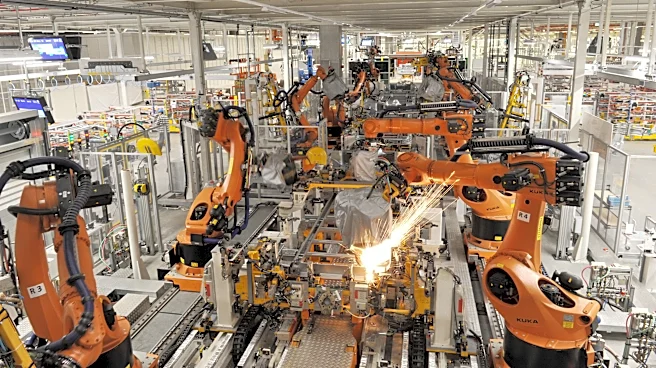
goods annually, with a significant portion vulnerable due to trade dependencies. These dependencies include national security concerns, supplier concentration, and geopolitical distances. McKinsey suggests that emerging technologies like AI and advanced robotics are crucial for this transformation, which would require fewer workers in some roles and more skilled workers in others. The transformation involves coordinated efforts across supply networks, including energy infrastructure and workforce development. The U.S. remains the world's second-largest manufacturer, but its share has declined over decades. The report argues that rebuilding the industrial base should focus on creating a more automated and technologically advanced system rather than recreating past manufacturing models.
Why It's Important?
The proposed $2 trillion investment is significant as it aims to address vulnerabilities in the U.S. supply chain, which have been highlighted by recent global disruptions. Strengthening the industrial base could enhance national security and economic stability by reducing reliance on foreign imports, particularly in critical sectors like semiconductors and electronics. This investment could also spur technological innovation and job creation in the U.S., positioning the country to better compete globally. The focus on automation and advanced manufacturing could lead to a more resilient economy, capable of withstanding future disruptions. However, the shift towards a more technologically advanced industrial base may also require significant workforce retraining and development to equip workers with the necessary skills.
What's Next?
The next steps involve mobilizing the proposed investment and implementing the technological and infrastructural changes outlined by McKinsey. This includes enhancing supply chain visibility, developing energy infrastructure, and training the workforce for new roles in an automated manufacturing environment. Policymakers and industry leaders will need to collaborate to create a conducive environment for these changes, potentially involving regulatory adjustments and incentives for businesses to invest in new technologies. The success of this initiative will depend on the ability to align business interests with national priorities, ensuring that the U.S. can maintain its competitive edge in global manufacturing.