








What's Happening?
The global market for mechanical equipment forgings is projected to experience significant growth through 2035, driven by increased capital investment in industrial automation and semiconductor manufacturing. According to a report by IndexBox, the market is expected
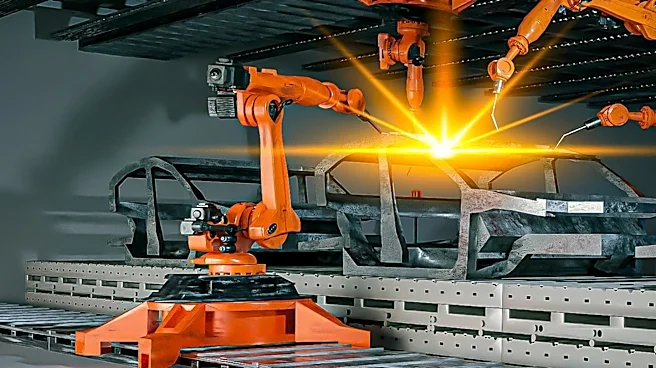
to expand at a compound annual growth rate (CAGR) of 5.2% from 2026 to 2035. This growth is supported by the rising demand for high-strength, durable forged components used in various sectors, including industrial automation, electronics, and semiconductor manufacturing. The trend towards smart factories and Industry 4.0 is further fueling the need for reliable forgings that can withstand continuous operation in automated lines. Key demand indicators include global robot installations and industrial production indices. The market is also seeing a shift towards near-net-shape forging techniques, which reduce material waste and lead times, enhancing the competitiveness of forged components.
Why It's Important?
The expansion of the mechanical equipment forgings market is significant for several reasons. It reflects the broader trend of increasing automation in manufacturing processes, which is crucial for improving efficiency and productivity across industries such as automotive, aerospace, and general machinery. The demand for precision forgings in semiconductor fabrication plants is particularly noteworthy, as it underscores the global push for semiconductor self-sufficiency, especially in the U.S., Europe, and Asia. This growth also highlights the importance of supply chain localization initiatives, which are reshaping sourcing patterns and reducing lead-time risks. The market's expansion is expected to provide stable demand for forged parts, driven by replacement and maintenance cycles in automated production lines. However, challenges such as persistent volatility in raw material costs and geopolitical trade tensions could impact the market's trajectory.
What's Next?
Looking ahead, the mechanical equipment forgings market is poised for continued growth, supported by ongoing investments in industrial automation and semiconductor manufacturing. The adoption of advanced forging and post-processing capabilities will be crucial to meet the demand for tighter tolerances and longer service intervals in technology supply chains. Suppliers with vertically integrated heat treatment and machining capabilities are likely to benefit from compressed lead times and improved margins. The market will also need to navigate potential risks, including geopolitical disruptions and energy cost increases, which could affect trade corridors and production costs. As the market evolves, the focus will likely shift towards more sustainable and efficient manufacturing practices, including the use of lighter, high-strength alloys and the integration of IoT sensors for predictive maintenance.