






What's Happening?
The electronic music duo Doublespeak, comprised of Neil Arthur of Blancmange and producer Ben Benge Edwards, has released their self-titled debut album. The trio, which also includes Erasure's Vince Clarke, focuses on creating electronic interpretations
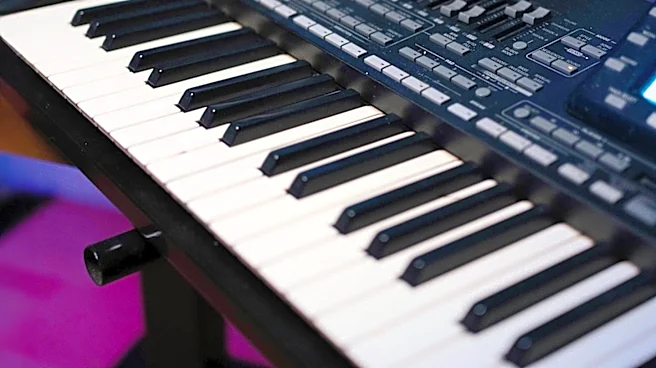
of songs they admire. Their creative process emphasizes the use of analogue synthesizers and drum machines, allowing for real-time manipulation and unexpected sonic developments. The album features covers spanning various decades, including a rendition of David Essex's "Rock On" from the early 1970s, which Arthur describes as having a proto-Prince sound. Edwards characterizes their version of "Rock On" as having a "Cold War, edgy, punky" vibe. The group also drew inspiration from the birth of punk music in 1976, appreciating its raw and open-ended approach to music-making. One of Edwards' favorite tracks on the album is "Richard!", a lesser-known song they found particularly powerful and beautiful to reinterpret.
Why It's Important?
The release of Doublespeak's debut album highlights a continued interest in electronic music and the reinterpretation of classic songs through modern sonic landscapes. This approach allows for a fresh perspective on familiar tunes, potentially introducing them to new audiences while also appealing to fans of the original artists and electronic genres. The duo's reliance on analogue synthesizers underscores a trend in music production that values the tactile and unpredictable nature of older technology over purely digital methods. This could influence other electronic artists to explore similar production techniques, fostering a more experimental and hands-on approach to music creation. Furthermore, by covering a range of songs from different eras, Doublespeak contributes to the ongoing dialogue between music history and contemporary sound, demonstrating how past influences can be reimagined for the present.
What's Next?
With the release of their self-titled album, Doublespeak will likely focus on promoting their new work. This could involve interviews, potential live performances, or further discussions about their unique creative process and the role of analogue synthesizers in their music. The album's reception will indicate the appetite for electronic reinterpretations of classic tracks and the duo's distinct sound. Depending on its success, Doublespeak may consider future projects, either continuing with their cover-based approach or exploring original compositions with the same electronic ethos. The group's emphasis on the hands-on nature of analogue synths also suggests a potential for workshops or demonstrations, further engaging with the electronic music community and inspiring other musicians.
Beyond the Headlines
Doublespeak's artistic choices, particularly their embrace of analogue synthesizers, touch upon broader themes concerning technology and creativity in the digital age. In an era increasingly dominated by artificial intelligence and digital music production, their commitment to physical circuits and real-time manipulation serves as a counter-narrative. This approach suggests a value in the imperfections and surprises that analogue tools offer, contrasting with the often-perfected and predictable outputs of digital methods. The band's work implicitly raises questions about the future of music creation: whether human-led, tactile experimentation will remain central, or if AI will increasingly shape the soundscape. Their project can be seen as a celebration of human ingenuity and the enduring appeal of hands-on artistry in an evolving technological landscape.