




What's Happening?
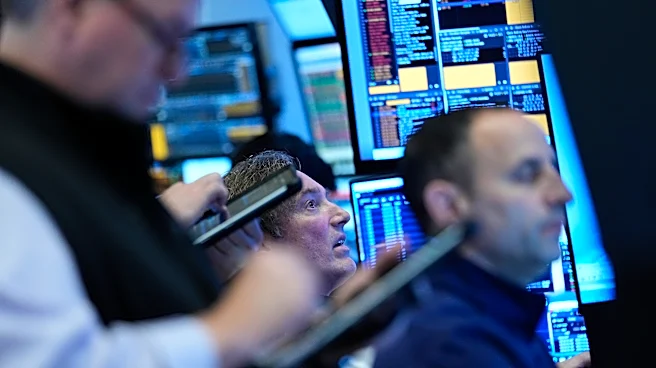
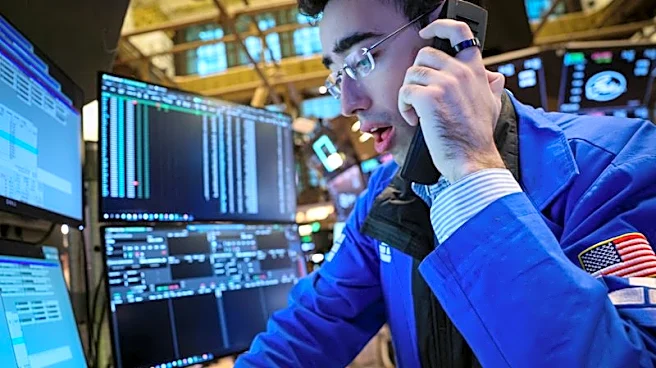
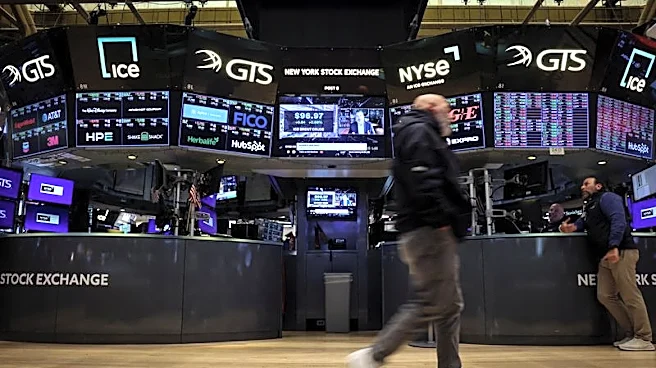
Wall Street forecasters are increasingly concerned that the Artificial Intelligence (AI) trade in the stock market may be nearing its end, following a significant sell-off in tech and AI-related stocks. The Nasdaq Composite entered negative territory
for the year, and both the S&P 500 and Dow Jones Industrial Average slid into correction territory. This downturn is attributed to panic over slowing AI capital expenditure, the impact on data centers, and a substantial 47% drop in Nvidia's stock since early October. The recent IPO of Anthropic, which was expected to boost the AI sector, failed to generate broader market enthusiasm, with the Dow dropping over 1,000 points and the S&P 500 and Nasdaq Composite each sliding around 2% on its debut day. Research firms like Capital Economics have long warned of an AI bubble, predicting a 9% drop in the S&P 500 through the end of next year, with potentially steeper interim losses.
Why It's Important?
The growing skepticism among Wall Street forecasters regarding the AI trade signals a potential shift in market dynamics that could have broad implications for U.S. investors and the technology sector. The AI-driven bull market, which has contributed significantly to the S&P 500's returns since late 2022, may be losing momentum. A significant correction or bust in AI-linked stocks could lead to substantial losses for investors heavily invested in the sector. Concerns about the revenue hurdle required to justify massive AI investments, potential stricter regulation, and tightening AI-related financing are contributing to this cautious outlook. This situation could prompt a broader market rotation, with investors seeking opportunities in less volatile sectors such as healthcare, financials, industrials, and consumer stocks, as suggested by market strategists.
What's Next?
Investors are now closely monitoring AI capital expenditure to determine if spending will continue to justify the high valuations in the tech space. A major fear is that data center spending will slow in the coming year due to potential regulatory crackdowns on new construction, which could cap growth in the sector. Market volatility is expected to remain elevated as investors reassess AI spending, regulation, industry leadership, and the conversion of investment into free cash flow. Some analysts predict a 'definite vibe shift' by the end of 2027, potentially leading to a 40% crash in AI-linked stocks by early 2028 if tech firms slash capital expenditure guidance. This environment suggests a move towards a 'stock pickers market,' where fundamental analysis of individual companies becomes more critical than broad sector bets.
Beyond the Headlines
The current market sentiment around AI stocks draws parallels to historical market bubbles, such as the dot-com bubble, raising questions about the sustainability of rapid growth driven by speculative investment. The debate centers on whether AI can generate the 'massive, unprecedented revenues' needed to justify multi-trillion-dollar investments, especially as underlying AI technology becomes more freely available. This situation highlights the inherent risks of investing in emerging technologies where valuations can outpace tangible revenue generation. The potential for increased regulation of AI's buildout and application could also introduce new uncertainties and costs for companies in the sector. Ultimately, the market's reassessment of AI's long-term profitability and the shift in investor focus could lead to a more mature and diversified investment landscape, moving beyond the concentrated gains seen in recent years.