






What's Happening?
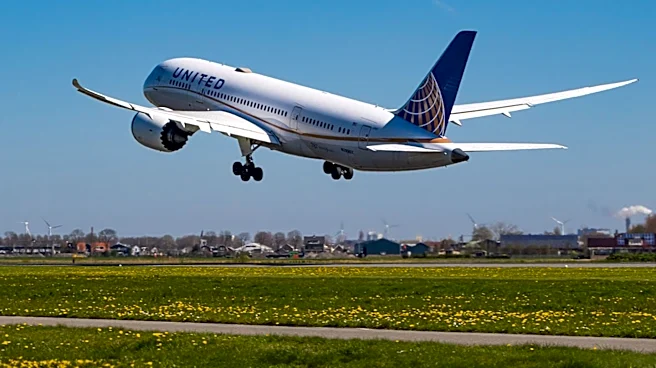
United Airlines is investigating the feasibility of launching direct flights to Uzbekistan and Kazakhstan. United Airlines CEO Scott Kirby revealed this during an episode of the Cheeky Pint podcast, noting that Patrick Quayle, the airline’s Senior Vice
President of Global Network Planning and Alliances, visited both countries to assess potential new routes. While the airline is actively exploring these destinations, specific cities, departure airports in the United States, or a definitive launch date have not been announced. A significant hurdle for these potential routes is the current restriction on flying over Russian airspace, which Kirby indicated would need to change for such flights to become viable. Despite this, United Airlines already facilitates travel to Kazakhstan through its partnership with Lufthansa, suggesting an existing demand for such connections.
Why It's Important?
The potential introduction of direct flights by a major U.S. carrier like United Airlines to Central Asian countries such as Uzbekistan and Kazakhstan signifies a strategic move to expand beyond traditional tourism markets. This initiative could open new economic and cultural corridors, fostering increased trade, investment, and tourism between the United States and Central Asia. For U.S. businesses, direct air links could streamline logistics and reduce travel times, making these regions more accessible for commercial ventures. Conversely, Central Asian economies could benefit from enhanced connectivity to the U.S. market, potentially boosting their tourism sectors and attracting foreign direct investment. The current reliance on partnerships, like United's with Lufthansa, highlights an existing, albeit indirect, demand that direct flights could more efficiently serve, potentially leading to competitive pricing and improved service for travelers.
What's Next?
The immediate next steps for United Airlines involve continued assessment of the aviation markets in Uzbekistan and Kazakhstan, alongside monitoring geopolitical developments concerning Russian airspace. The airline's ability to launch these direct flights is heavily contingent on a potential future change in restrictions over Russian airspace, which would significantly impact flight times and operational costs. Should these restrictions ease, United Airlines would likely proceed with identifying specific routes, securing necessary regulatory approvals, and establishing a launch timeline. The entry of a U.S. carrier into this market would introduce new competition to existing services, such as those offered by Uzbekistan Airways and the planned flights by Kazakhstan’s Air Astana to New York, potentially leading to a more dynamic and competitive air travel landscape between the U.S. and Central Asia.
Beyond the Headlines
The exploration of direct flights to Uzbekistan and Kazakhstan by United Airlines points to a broader trend of airlines seeking to diversify their international networks and tap into emerging markets. This strategic foresight acknowledges the growing economic and geopolitical importance of Central Asia. Beyond the immediate commercial benefits, establishing direct air links can play a crucial role in strengthening diplomatic ties and cultural exchange between the U.S. and these nations. It also underscores the significant impact of geopolitical factors, such as airspace restrictions, on global aviation strategy and route planning. The challenge of bypassing Russian airspace highlights the complex interplay between international relations and commercial aviation, where political decisions can directly influence economic opportunities and connectivity.