





What's Happening?
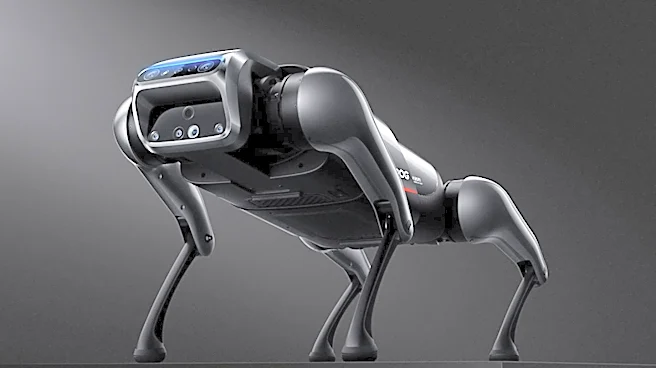
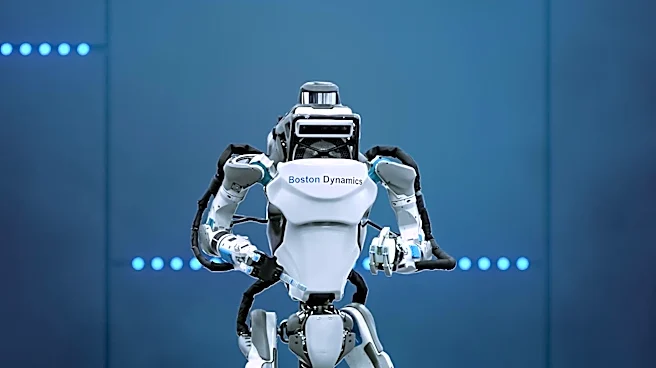
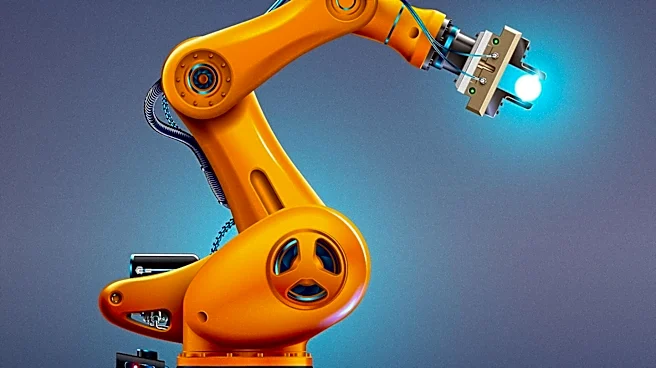
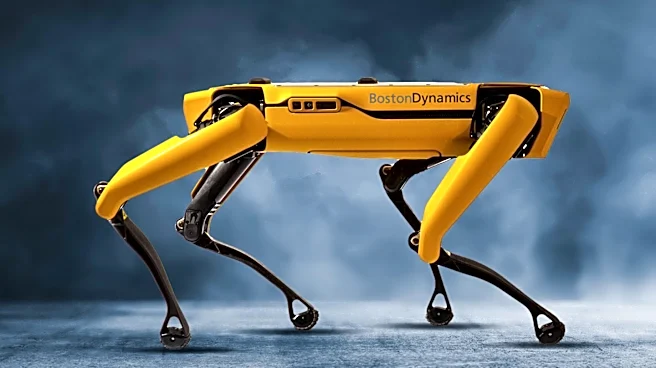
The integration of artificial intelligence with robotics has undergone a significant transformation, moving beyond deterministic programming to enable robots to perceive, comprehend, decide, and act autonomously. This evolution, termed 'Physical AI,'
is revolutionizing automation in factories and warehouses. In 2026, Physical AI companies have attracted over $23 billion in venture capital, with major investments including Waymo's $16 billion Series D and Skild AI's $1.4 billion Series C. The focus is on enhancing industrial automation and developing autonomous vehicles and humanoid robots. This trend is particularly prominent in North America, where the demand for hyperscale data centers is rising, driven by the need for advanced simulation, fleet orchestration, and reasoning capabilities.
Why It's Important?
The surge in investment in Physical AI highlights its potential to address labor shortages and improve precision across various industries. By enabling robots to perform complex tasks autonomously, businesses can enhance productivity and efficiency, particularly in manufacturing and logistics. The development of autonomous vehicles and humanoid robots could transform transportation and service industries, offering new solutions to existing challenges. Additionally, the growth of hyperscale data centers to support these technologies underscores the increasing reliance on cloud and edge computing, which could drive further innovation and economic growth in the tech sector.
What's Next?
As Physical AI continues to evolve, the focus will likely shift towards refining the technology and expanding its applications. Companies may explore new markets and develop more sophisticated AI models to enhance robot capabilities. The ongoing investment in data centers suggests a growing infrastructure to support these advancements. Stakeholders, including investors and industry leaders, will likely monitor the progress of Physical AI closely, assessing its impact on labor markets and regulatory environments. Collaboration between tech firms and policymakers may be necessary to address potential ethical and legal challenges associated with autonomous systems.
Beyond the Headlines
The rise of Physical AI raises important ethical and cultural questions about the role of robots in society. As robots become more autonomous, issues related to job displacement, privacy, and security will need to be addressed. The development of humanoid robots also prompts discussions about human-robot interaction and the potential for robots to perform tasks traditionally reserved for humans. These considerations will be crucial as society navigates the integration of advanced AI technologies into everyday life.