





What's Happening?
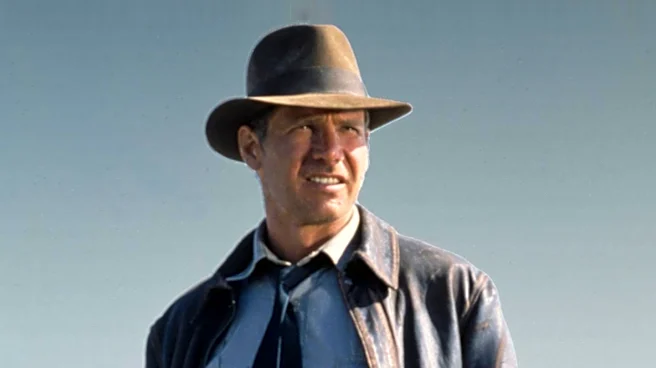
In the mid-1970s, before achieving global fame, Harrison Ford was working as a carpenter to support himself, as acting roles were not consistently covering his expenses. Despite having appeared in George Lucas's 'American Graffiti' a few years prior,
Ford found himself in a period where carpentry was his primary source of income. A pivotal moment occurred when casting director Fred Roos, a long-time supporter of Ford, repeatedly put his name forward for roles. When George Lucas was casting for his new space movie, Roos included Harrison Ford's name among his suggestions. Coincidentally, Ford was finishing a carpentry job at Francis Ford Coppola's office, which Lucas was using for auditions. While sweeping the floor in his work belt, Ford encountered Lucas. Weeks later, Ford was asked to read lines with actors auditioning for the film, unaware he was being considered for a part himself. This led to him securing the iconic role of Han Solo in 'Star Wars'.
Why It's Important?
This narrative highlights the often unpredictable path to success in the entertainment industry and the critical role of networking and persistence. Ford's story underscores that talent alone may not be sufficient; consistent advocacy from individuals like Fred Roos can be instrumental in opening doors. It also illustrates the significance of being present and engaged, even in seemingly unrelated capacities, as Ford's carpentry work placed him directly in the environment where a life-changing opportunity arose. For aspiring actors and creatives, this serves as a powerful example of how indirect connections and maintaining a professional presence can lead to unexpected breakthroughs. The story also emphasizes the value of 'weak ties' in professional networking, where acquaintances or indirect connections can sometimes be more beneficial than close ones in career advancement.
What's Next?
While this story recounts a past event, its implications continue to resonate within the entertainment industry. It reinforces the ongoing importance of casting directors and industry insiders who champion emerging talent. For current and future actors, the takeaway is to cultivate relationships with casting professionals and maintain visibility within industry circles, even through non-acting work. The narrative also suggests that being adaptable and open to various forms of work can inadvertently lead to significant career opportunities. The 'fortuitous' nature of Ford's casting serves as a reminder that while hard work is essential, serendipitous encounters and the advocacy of others often play a crucial role in career trajectories in highly competitive fields.
Beyond the Headlines
Beyond the immediate narrative of Ford's casting, this story touches upon broader themes of resilience, the nature of opportunity, and the often-unseen labor that precedes public success. It challenges the perception that success is solely a result of direct application or auditions, revealing the intricate web of relationships and chance encounters that can shape careers. Ethically, it highlights the responsibility of those in positions of influence, like casting directors, to recognize and advocate for talent, even when it's not immediately apparent. Culturally, Ford's journey from carpenter to Han Solo has become part of Hollywood lore, symbolizing the 'rags-to-riches' narrative that continues to inspire. It also subtly critiques the idea that one must be constantly 'performing' to be noticed, as Ford was simply working when his opportunity arose, emphasizing authenticity and diligence.