






What's Happening?
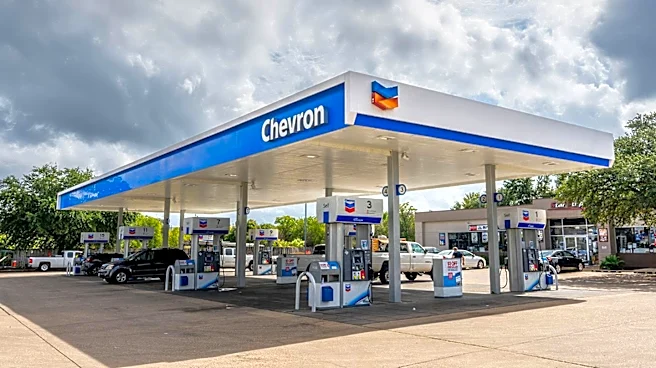
Chevron Corporation has announced its agreement to divest its ownership interests in Hess Midstream and its crude midstream assets located in the Denver-Julesburg (DJ) Basin. This development, reported in early October, follows Chevron's acquisition of
Hess, which also included a significant stake in Guyana. Midstream businesses are crucial for gathering, processing, and transporting oil and gas from the wellhead to the market, typically generating stable, fee-based revenue through long-term contracts. Hess Midstream specifically supports Bakken operations in North Dakota, while the DJ Basin assets encompass crude gathering and related facilities in Colorado. Concurrently, Reuters reported that Chevron's Chief Financial Officer, Eimear Bonner, will assume an expanded leadership role within the company's oil, products, and gas business, a move that has sparked discussions about succession planning within the company.
Why It's Important?
Chevron's divestment of its Hess Midstream and DJ Basin assets signifies a strategic realignment within its portfolio, potentially focusing on core upstream and downstream operations. Midstream assets, while providing stable cash flows, may not align with Chevron's long-term strategic vision or capital allocation priorities, especially following a major acquisition. This move could free up capital for other investments or debt reduction. The expanded role for CFO Eimear Bonner suggests a strengthening of leadership in key operational areas, indicating a potential shift in the company's internal structure and future strategic direction. For the broader energy market, such divestments can signal a company's outlook on specific regional assets or segments of the value chain, influencing investor perceptions and potentially leading to further consolidation or divestment activities by other major players.
What's Next?
The divestment of Hess Midstream and DJ Basin assets will likely proceed with the formalization of agreements and regulatory approvals. This process could involve identifying suitable buyers and negotiating terms, which may take several months. The capital generated from these sales could be reallocated to Chevron's other significant projects, such as its operations in the Permian Basin, the Gulf of Mexico, Kazakhstan, Australia, or its expanding footprint in Guyana. The increased responsibility for Eimear Bonner suggests a continued focus on operational efficiency and strategic financial management, which could influence Chevron's future investment decisions and overall business strategy. The company's performance will continue to be closely watched, particularly as it navigates global energy market dynamics and its ongoing projects.
Beyond the Headlines
The divestment highlights the dynamic nature of portfolio management within major oil and gas companies, especially in the wake of large-scale mergers and acquisitions. Companies like Chevron continuously evaluate their asset base to optimize returns and align with evolving market conditions and strategic objectives. The decision to shed midstream assets, which are generally considered stable, could indicate a preference for higher-growth or more strategically central upstream and downstream opportunities. This trend could lead to a greater specialization within the energy sector, with some companies focusing purely on production, others on processing and transportation, and still others on refining and distribution. The leadership changes also underscore the importance of internal talent development and succession planning in large corporations, ensuring continuity and strategic direction during periods of significant corporate activity.