



What's Happening?
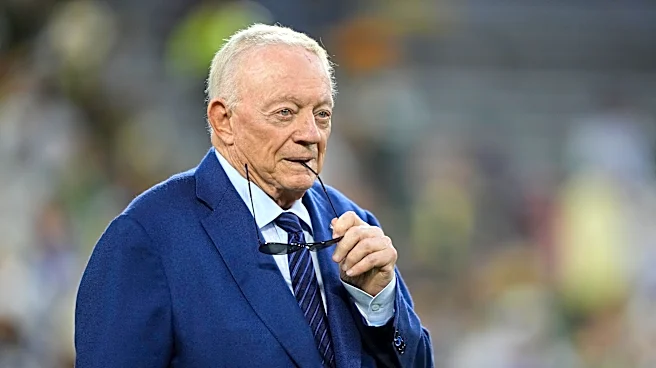
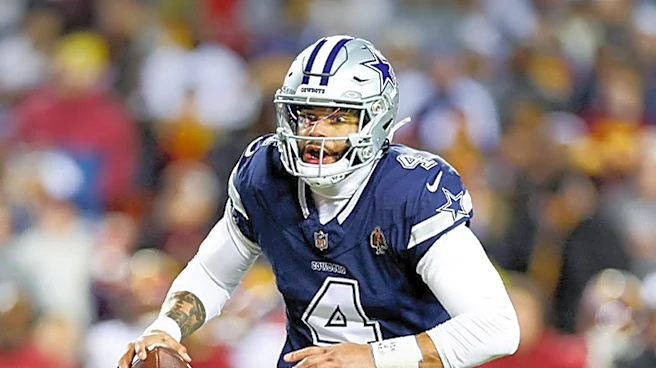
The Dallas Cowboys, often referred to as 'America’s Team,' continue to be the most valuable franchise in the NFL, with Forbes valuing the team at $17 billion in 2026. This represents a significant 31% increase from its 2025 valuation of $13 billion. Despite
not having won a Super Bowl since the 1995 season, the Cowboys were also cited as the 'world’s most profitable' sports team in 2026, according to a January Forbes report. The team generated an estimated $629 million in operating income during the past season, which is $220 million more than the second-most profitable franchise, the Golden State Warriors. Owner Jerry Jones purchased the team in 1989 for $140 million, a transaction that marked the first time a sports team was bought for over $100 million. At the time of purchase, the Cowboys were reportedly losing $1 million per month, and Jones was paying 11% interest on the borrowed funds.
Why It's Important?
The Dallas Cowboys' sustained high valuation and profitability, despite a prolonged Super Bowl drought, highlight the significant financial power of established sports franchises in the U.S. This demonstrates that brand recognition, historical legacy, and effective business management can outweigh on-field performance in determining a team's market value and financial success. The substantial increase in valuation from $13 billion to $17 billion in a single year underscores the robust growth and investment appeal within the professional sports industry. For other NFL teams and sports franchises, the Cowboys' model illustrates the potential for revenue generation through various streams, including media rights, sponsorships, and merchandise, even without recent championship titles. This trend also impacts the broader U.S. economy by attracting significant investment and contributing to the entertainment sector's growth, influencing how sports teams are perceived as long-term assets rather than solely performance-driven entities.
What's Next?
The Dallas Cowboys are projected to continue their financial dominance in the NFL, with no other team currently appearing likely to surpass their valuation in the near future. The team's consistent profitability and increasing value suggest ongoing strong financial performance, regardless of their on-field playoff success. Future developments will likely focus on how the franchise continues to leverage its 'America's Team' brand for further revenue growth, potentially through new media deals, stadium enhancements, or expanded global marketing efforts. While the wait for another Super Bowl title persists, the financial trajectory indicates that the team's business operations will remain a benchmark in professional sports. The continued high valuation could also influence player contracts and team investments, as the franchise has substantial capital to attract and retain talent, aiming to eventually translate financial success into championship victories.
Beyond the Headlines
The enduring financial success of the Dallas Cowboys, despite a lack of recent championships, reveals a deeper cultural and economic phenomenon in American sports. The 'America's Team' moniker, while rooted in past glory, continues to resonate with a vast fan base, transforming the team into a powerful cultural institution that transcends mere athletic competition. This highlights the significant role of narrative and identity in brand building, where a team's story and perceived status can generate immense loyalty and commercial value. Ethically, it raises questions about the balance between financial profitability and competitive success in professional sports, and whether the primary objective of a franchise is to win championships or to maximize shareholder value. The Cowboys' case suggests that for many owners, the latter can be achieved even without the former, indicating a shift in how sports teams are viewed—less as purely sporting entities and more as global entertainment brands with diversified revenue streams.