





What's Happening?
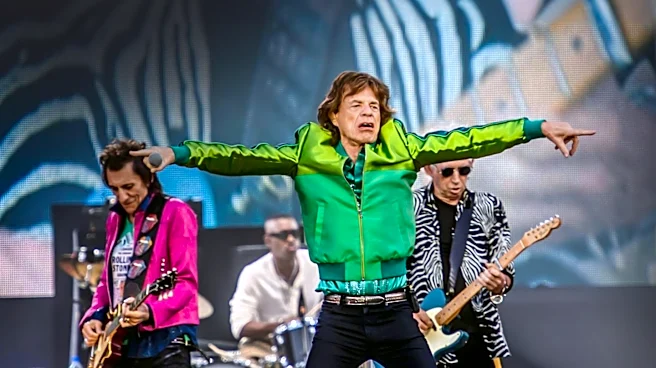
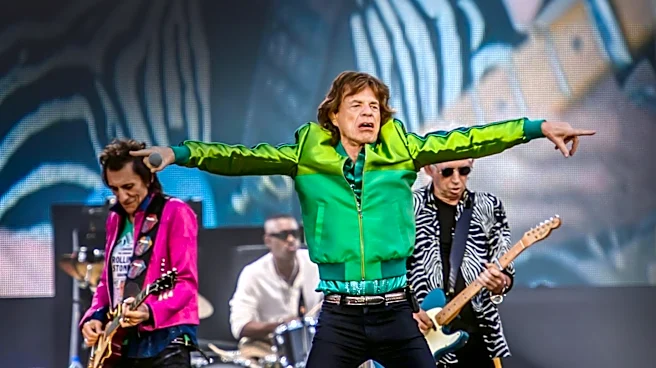
Mick Jagger has disclosed that he was the originator of the iconic guitar riff for The Rolling Stones' 1971 classic 'Brown Sugar.' In an interview with Rick Beato, Jagger explained that while the riff is often attributed to Keith Richards, he composed
it. Richards himself acknowledged Jagger's authorship in his autobiography, 'Life,' noting it as an exception to his own reputation as the 'riff master.' Jagger also discussed his evolving songwriting methods, stating that he now prefers using demos to experiment with different musical ideas before recording, a shift from the band's earlier practice of extensive in-studio writing, which he now considers a 'terrible' approach. He highlighted that while he often brings initial ideas, he anticipates and welcomes Richards' contributions to refine or improve them, as seen in other tracks like 'Mr Charm' from their latest album, 'Foreign Tongues.'
Why It's Important?
This revelation by Mick Jagger offers significant insight into the collaborative and sometimes complex songwriting dynamics within The Rolling Stones, one of the most influential bands in rock history. It challenges long-held assumptions about the creative contributions of individual members, particularly regarding a song as iconic as 'Brown Sugar.' For musicologists and fans, this detail enriches the understanding of the band's creative process and the interplay between Jagger and Richards. It also underscores the often-unseen contributions of band members beyond their primary roles, highlighting Jagger's role not just as a lyricist and frontman but also as a significant musical architect. This insight can influence how the band's catalog is analyzed and appreciated, potentially sparking renewed interest in the origins of their classic tracks.
Beyond the Headlines
The disclosure about 'Brown Sugar's' riff authorship touches upon broader themes of creative credit and the public perception of artistic roles within collaborative groups. In many legendary bands, the contributions of individual members can become blurred or misattributed over time, often due to public narratives or dominant personalities. Jagger's candidness provides a rare glimpse into the internal workings of a highly successful and long-standing musical partnership, illustrating how ideas are generated, shared, and sometimes transformed. It also highlights the humility and mutual respect within the band, as Jagger expresses hope for Richards to improve his initial ideas, and Richards acknowledges Jagger's original contribution. This dynamic is a testament to their enduring creative relationship, emphasizing that collective artistry often involves a fluid exchange of ideas rather than rigid individual roles.