




What's Happening?
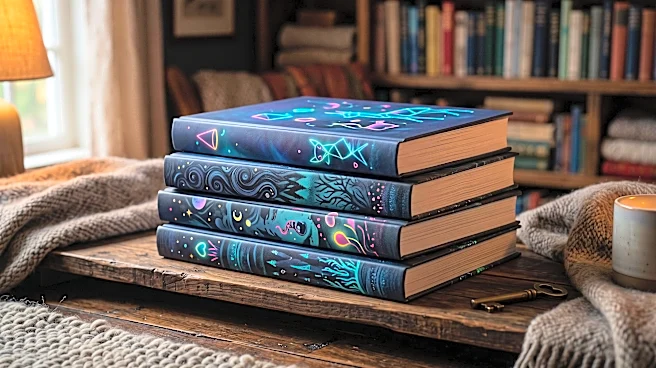
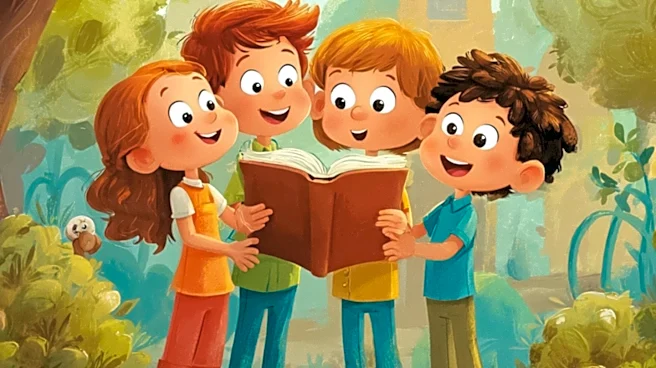
MyVeronaNJ reports on new book recommendations for Halloween festivities, highlighting a trend in 'not-too-spooky' scary stories for elementary-aged children. Among the featured titles is Aaron Reynolds' beginner chapter book trilogy, 'Jasper Rabbit’s
Creepy Tales,' aimed at grades 1-4. These books are described as employing a 'dry, Twilight Zone approach' to everyday situations, which then spiral into eerie and ridiculous effects. The stories feature glowing neon text and explore scenarios like a reluctant agreement to eat salad instead of burgers, leading to bizarre outcomes. This trilogy is presented as a suitable progression for fans of Reynolds' 'Creepy Carrots' picture book series. The article also mentions other age-appropriate spooky collections, such as Max Brallier's 'The Dark and Other Scary Stories' and Rowley Jefferson’s 'Awesome Friendly Spooky Stories 2,' catering to different levels of fright and humor for young readers.
Why It's Important?
This trend in children's literature is significant as it addresses a specific niche for young readers who desire the thrill of a 'ghost story' without experiencing excessive fear. By offering a 'Twilight Zone' style narrative, these books introduce children to suspense, mystery, and the concept of the uncanny in a controlled and age-appropriate manner. This approach can foster critical thinking and imagination by presenting familiar situations that take unexpected, eerie turns. Furthermore, in an era where screen time is prevalent, promoting engaging books like these encourages reading habits and provides an alternative form of entertainment that stimulates cognitive development. The availability of such stories helps parents and educators find suitable Halloween-themed content that aligns with developmental stages, ensuring children can participate in seasonal traditions without being overwhelmed by overly frightening material.
What's Next?
The success of books like 'Jasper Rabbit’s Creepy Tales' may lead to an expansion of the 'not-too-spooky' subgenre in children's literature, with more authors and publishers exploring similar themes and narrative styles. This could result in a broader range of options for young readers seeking mild thrills and mysteries. Publishers might also look to adapt these popular book series into other media, such as animated shorts or interactive digital stories, further extending their reach. As parents and educators continue to seek engaging and developmentally appropriate content, the demand for stories that balance excitement with comfort is likely to grow. This trend could also influence how Halloween-themed content is developed across various children's media, encouraging creators to focus on imaginative and thought-provoking narratives rather than solely on jump scares or intense horror.
Beyond the Headlines
The emergence of 'Twilight Zone'-esque stories for children reflects a broader cultural understanding of how to introduce complex themes like the unknown, the absurd, and the subtly unsettling to young audiences. It moves beyond simplistic good-versus-evil narratives, encouraging children to think about the strangeness inherent in everyday life. This approach can subtly prepare children for more complex literary themes later in life, fostering an appreciation for narrative ambiguity and psychological suspense. Ethically, these books provide a safe space for children to explore feelings of mild unease or curiosity without the potential trauma associated with more intense horror. Culturally, it signifies a recognition that children's entertainment can be sophisticated and thought-provoking, not just purely didactic or overtly fantastical. This genre also taps into the timeless appeal of mystery and the human fascination with what lies just beyond the ordinary, tailored for a younger demographic.