






What's Happening?
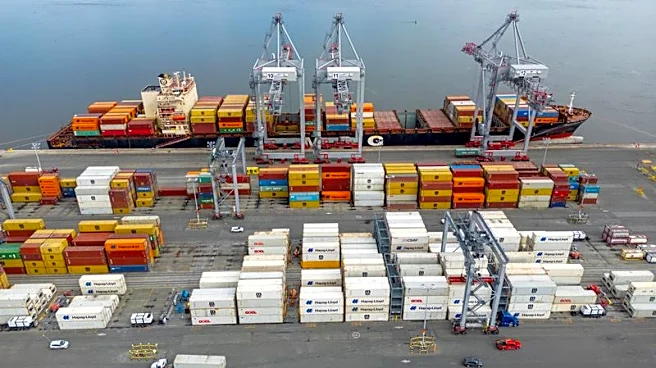
The United States is set to implement 50% tariffs on $20 billion worth of Canadian imports, effective Saturday at 12:01 am local time. This decision follows the failure of last-minute negotiations between the two long-standing allies to reach a trade
agreement. The tariffs will target a range of Canadian goods, including plywood, liquor, electrical equipment, and hockey gear. Negotiations had been ongoing for weeks, with a draft deal proposing reduced U.S. tariffs on certain Canadian steel and aluminum to 25% and Canadian autos to 15%. In return, Ottawa was expected to remove retaliatory measures imposed last year. The White House had also sought concessions such as the elimination of Canada's counter-tariffs on American vehicles and the lifting of a ban on the retail sale of U.S. alcoholic beverages in most Canadian provinces. However, after three days of talks in Washington between Canada's Minister for Trade with the U.S., Dominic LeBlanc, and U.S. Trade Representative Jamieson Greer, an agreement could not be finalized. Greer stated that Canada declined to finalize the deal, citing new demands and walk-backs from Canada, while Canadian Prime Minister Mark Carney blamed Washington for the breakdown, calling the proposed terms "unfair."
Why It's Important?
The imposition of these tariffs signifies a significant escalation in trade tensions between the U.S. and Canada, two historically close economic partners. While the new tariffs affect a relatively smaller portion of Canadian exports compared to previous measures, they add to existing U.S. tariffs on steel, lumber, and autos. This move could impede Canada's economic recovery and strain future engagement on broader free-trade negotiations. The tariffs are particularly impactful as they will apply even to Canadian goods that typically qualify for preferential treatment under the U.S.-Mexico-Canada trade agreement, which has previously shielded much of Canada's industry. For U.S. consumers and businesses, these tariffs could lead to higher prices for affected Canadian goods and potentially disrupt supply chains. Canadian Prime Minister Mark Carney has vowed to retaliate "dollar for dollar," indicating a potential tit-for-tat trade dispute that could further destabilize North American trade relations and impact various industries in both countries.
What's Next?
The immediate consequence will be the implementation of 50% tariffs on $20 billion of Canadian imports by the U.S. starting Saturday. Canadian Prime Minister Mark Carney has announced the suspension of trade negotiations and pledged to retaliate with equivalent tariffs against the U.S. This suggests a period of heightened trade friction and potential economic countermeasures from both sides. No new talks have been scheduled, indicating a stalemate in the trade discussions. Businesses in both countries that rely on cross-border trade in affected sectors, such as manufacturing, retail, and sports equipment, will need to adjust to the new tariff regime. The breakdown of these negotiations could also influence the broader political and economic relationship between the U.S. and Canada, potentially affecting future collaborations on other bilateral and international issues. The situation is likely to evolve as both governments assess the economic impact and consider their next strategic moves in this trade dispute.
Beyond the Headlines
This trade dispute extends beyond immediate economic impacts, touching upon the reliability of international trade agreements and the dynamics of long-standing alliances. The U.S. decision to impose tariffs, despite the existence of the US-Mexico-Canada trade agreement, raises questions about the stability and enforceability of such pacts. It highlights a shift in trade policy where historical alliances may not guarantee preferential treatment, potentially leading other nations to re-evaluate their trade relationships with the U.S. The Canadian Prime Minister's strong reaction, calling the U.S. terms "unfair" and questioning the "reliability of any deal," underscores a growing sentiment of distrust. This could foster a more protectionist global trade environment, where countries prioritize domestic interests over multilateral cooperation. The dispute also reflects the complex interplay between domestic political pressures and international trade negotiations, where last-minute demands can derail carefully constructed agreements, impacting not just economies but also diplomatic ties and geopolitical stability.