







What's Happening?
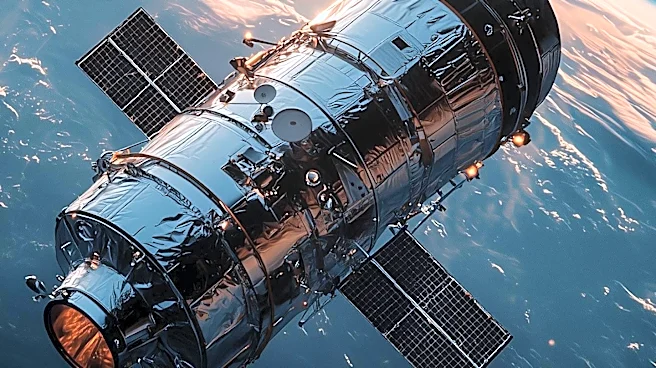
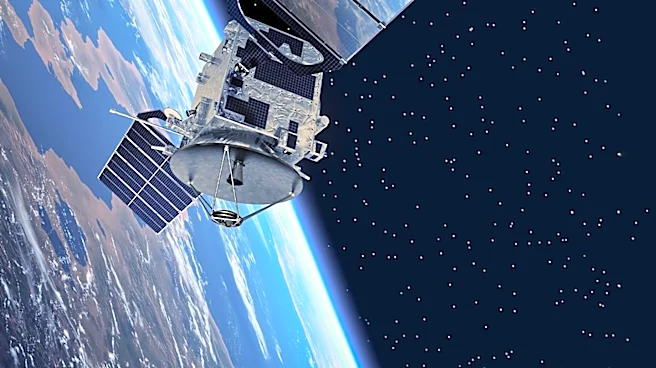
Reflect Orbital, a California-based startup, has received authorization from the U.S. Federal Communications Commission (FCC) to launch its first space mirror, Eärendil-1, into low Earth orbit. This satellite is designed to redirect sunlight to Earth at night
using a 59-foot reflective surface. The company plans to eventually deploy a constellation of 50,000 such satellites by 2035. The technology aims to provide on-demand illumination for various industries, including solar energy, agriculture, and emergency response. However, the project has sparked concerns about its potential impact on optical astronomy, wildlife, and aviation safety. The FCC's decision comes despite nearly 2,000 public comments opposing the project, with significant objections from the American Astronomical Society and other scientific organizations.
Why It's Important?
The launch of Eärendil-1 represents a significant development in space technology, with potential applications across multiple sectors. By providing artificial sunlight, the project could revolutionize industries that rely on natural light, enhancing productivity and safety. However, the initiative also raises critical environmental and scientific concerns. The increase in satellite constellations could exacerbate space debris issues and light pollution, potentially hindering astronomical research. Additionally, the disruption of natural light cycles could affect wildlife and pose risks to aviation. The balance between technological advancement and environmental preservation is at the forefront of this debate, highlighting the need for careful regulatory oversight.
What's Next?
Reflect Orbital plans to monitor the performance of Eärendil-1 and gather data to refine its technology. The company aims to address the concerns raised by the scientific community and the public, potentially adjusting its plans to mitigate negative impacts. Regulatory bodies may face increased pressure to establish guidelines for space-based projects that affect the environment and scientific research. The success or failure of this initial launch could influence future policies and the development of similar technologies. Stakeholders, including environmental groups and scientific organizations, are likely to continue advocating for stringent regulations to protect the night sky and natural ecosystems.