






What's Happening?
Joby Aviation (JOBY) stock experienced an 11.11% increase in its latest trading session, closing at $3.90 after previously hitting a 52-week low of $3.26. This rebound is attributed to several factors, including investor optimism surrounding upcoming
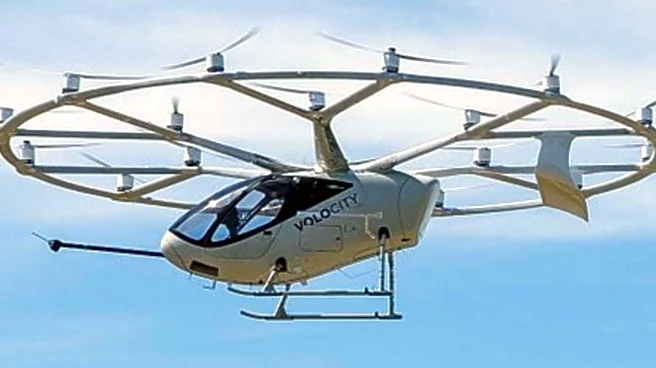
flight testing milestones in Dubai. Joby Aviation has a six-year agreement with Dubai's Road and Transport Authority to operate passenger air taxi services, with piloted operational test flights expected before the end of the year. The company's aircraft is an all-electric vertical takeoff and landing (eVTOL) vehicle designed to transport four passengers and a pilot at speeds up to 200 mph, with a range of approximately 100 miles on a single charge. This zero-emission aircraft is intended for an aerial ridesharing network. Additionally, the stock's rise is seen as an oversold bounce, where bargain hunters and short-position covers stepped in after a significant price drop. A broader market rotation into small-cap companies also provided tailwinds for Joby Aviation.
Why It's Important?
This stock movement is significant for the emerging electric aviation sector, particularly for companies like Joby Aviation that are still in pre-commercial stages. The successful execution of piloted test flights in Dubai could serve as a crucial validation of the company's technology and operational capabilities, potentially restoring investor confidence that has been shaken by high interest rates, risk-off market sentiment, and certification delays. The company's integrated business model, which includes an aerial ridesharing network and commercial revenue from Blade Urban Air Mobility, relies heavily on achieving these operational milestones. A positive outcome in Dubai could accelerate the path to commercialization, influencing future investment and partnerships within the U.S. and international markets. Conversely, any delays or setbacks could further depress the stock and impact the broader eVTOL industry's perception and funding prospects.
What's Next?
Joby Aviation is expected to conduct piloted flight tests along its dedicated vertiport corridor in Dubai, a critical near-term catalyst for the company. In the United States, Joby Aviation is progressing through Stage 4 and Stage 5 of the Federal Aviation Administration (FAA) type certification process, which is essential for commercial air carrier certification. The company also plans to complete its acquisition of Resonant Sciences, an advanced defense technology firm, which will expand its defense capabilities but also utilize a significant portion of its cash reserves. Investors will be closely watching the company's fourth-quarter and full-year 2026 financial metrics, expected in February 2027, for insights into cash burn stabilization and 2027 capital expenditure guidance. These upcoming operational and regulatory milestones will be key determinants of Joby Aviation's future stock performance and its trajectory toward commercial viability.
Beyond the Headlines
The performance of Joby Aviation and the broader eVTOL sector highlights the complex interplay between technological innovation, regulatory hurdles, and market sentiment. The substantial capital consumption required for aircraft prototyping, factory tooling, and regulatory engineering personnel underscores the financial risks associated with pioneering new transportation technologies. The industry's vulnerability to 'sentiment spillover,' where setbacks at one company can affect others, indicates a collective challenge in building public and investor trust. Furthermore, the reliance on infrastructure development, such as specialized vertiports and high-voltage charging networks, points to the need for coordinated efforts between private companies and municipal authorities. The long-term success of aerial ridesharing will depend not only on technological advancements but also on overcoming these systemic challenges and establishing a robust, safe, and economically viable ecosystem.