







What's Happening?
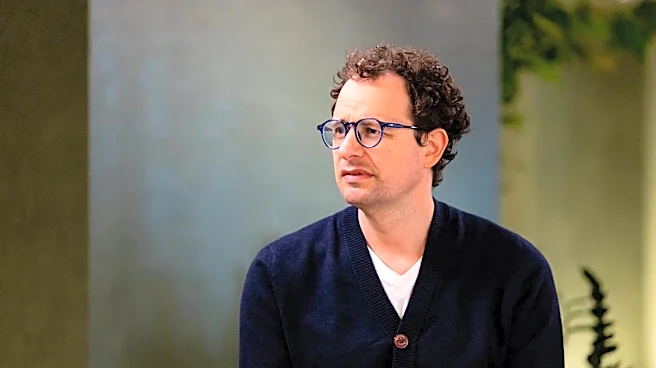
Manohar Paluri, an Indian American technology executive with 14 years of experience at Meta, has left the company to co-found Warp Sciences. This new San Francisco Bay Area-based startup aims to accelerate drug discovery through the integration of artificial
intelligence (AI), robotics, and chemistry. Warp Sciences recently announced it secured $215 million in Series A funding, led by Lightspeed Venture Partners. The company's approach involves building U.S.-based laboratory infrastructure to help pharmaceutical and biotechnology companies create and test molecules more efficiently. Paluri, who served as Vice President of AI at Meta, will be the Chief Technology Officer. Other co-founders include CEO Kevin Weil, former OpenAI chief product officer, and COO DJ Patil, the first U.S. chief data scientist. Warp Sciences plans to focus on lead optimization in small-molecule drug discovery, combining experienced chemists with AI tools and robotic laboratory equipment to generate experimental data that informs future research and improves AI systems.
Why It's Important?
The establishment of Warp Sciences and its significant funding underscore a growing trend in the pharmaceutical and biotechnology sectors: the strategic integration of AI and robotics to revolutionize drug discovery. This initiative is particularly important for the U.S. as it aims to build domestic scientific research capacity, potentially reducing reliance on overseas research and development. By accelerating the process of making and testing molecules, Warp Sciences could significantly cut down the time and cost associated with bringing new drugs to market. This could lead to faster development of treatments for various diseases, benefiting public health and potentially creating new economic opportunities within the U.S. life sciences industry. The involvement of prominent tech executives and substantial venture capital investment signals confidence in the potential of AI to bridge the gap between advanced computing and physical sciences, a challenge that has historically limited innovation in drug development.
What's Next?
Warp Sciences intends to begin by focusing on lead optimization in small-molecule drug discovery. The company plans to establish a preclinical contract research organization that will manufacture and test molecules for pharmaceutical and biotechnology clients. Initially, scientists will collaborate on customer projects, simultaneously developing and validating the technology as laboratory workflows become increasingly automated. The company's model emphasizes integrating software, AI, and robotics into the experimental process, ensuring that each experiment informs subsequent work. Warp Sciences will provide research infrastructure rather than developing its own drugs, allowing customers to retain control over their drug development programs. This approach suggests a future where drug developers can conduct chemistry experiments more efficiently, potentially leading to a faster pipeline of new therapeutic compounds.
Beyond the Headlines
The emergence of Warp Sciences highlights a broader shift in scientific research, where AI and automation are becoming central to experimental design and execution. This development could lead to profound ethical and legal considerations, particularly regarding data ownership, intellectual property generated by AI, and the role of human scientists in an increasingly automated lab environment. The company's focus on generating real-world experimental data at scale could also set new standards for scientific rigor and reproducibility in drug discovery. Furthermore, by positioning itself as a research infrastructure provider, Warp Sciences could foster a more collaborative ecosystem within the pharmaceutical industry, potentially democratizing access to advanced AI and robotic capabilities for smaller biotech firms. This model could also influence future regulatory frameworks for AI-driven drug development, emphasizing data-driven validation and transparency.