
What's Happening?
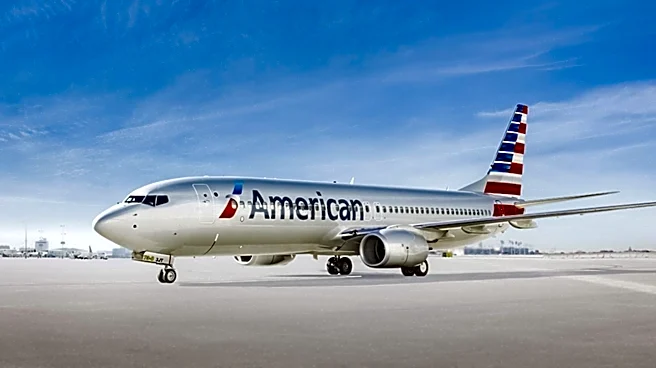
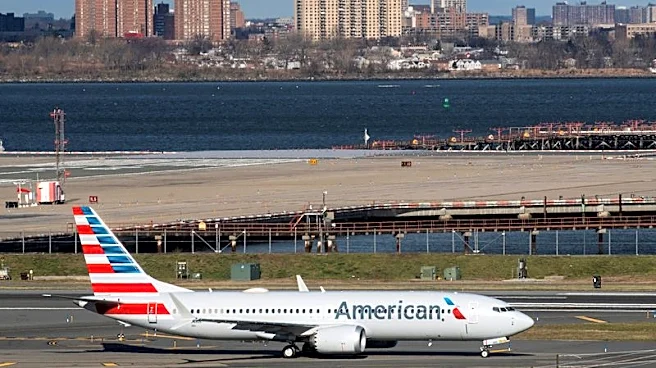
American Airlines has announced a significant fleetwide upgrade for its narrow-body aircraft, focusing on enhancing the passenger experience and increasing premium seating options. The airline plans to
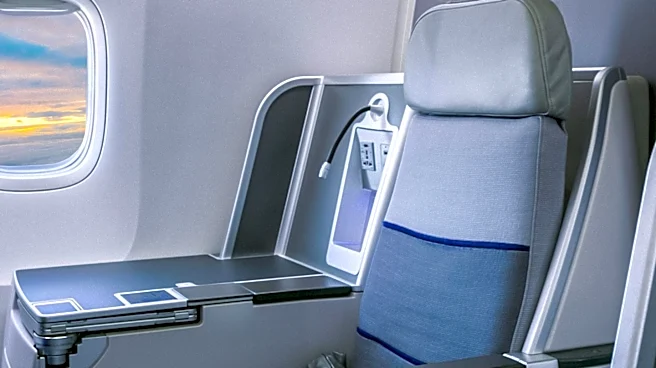
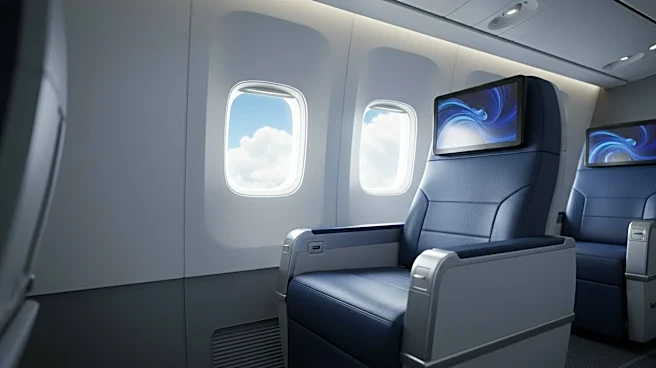
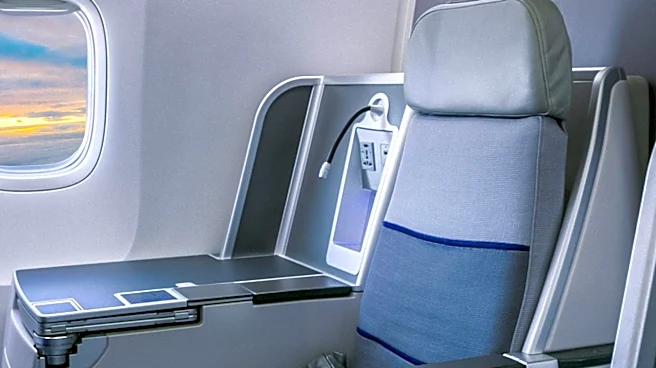
install seatback screens at every seat and expand premium seating from 25% to 40% of each plane's total capacity. This expansion will include additional first-class and extra-legroom seats. The retrofitting process for over 800 narrow-body aircraft is scheduled to begin in 2028 and conclude in the early 2030s. Additionally, newly delivered Airbus and Boeing aircraft will come with pre-installed screens and will be integrated into American's fleet starting in 2028. This move marks a shift from American's previous strategy, which assumed passengers would primarily use personal devices for in-flight entertainment.
Why It's Important?
This strategic investment by American Airlines is a direct effort to compete more aggressively with rivals like Delta Air Lines and United Airlines, particularly in attracting high-spending travelers. By increasing premium seating, American aims to capture a larger share of the revenue generated by these passengers, who currently account for nearly half of the airline's ticketed revenue despite occupying only 30% of seats. The reintroduction of seatback screens addresses a recognized shift in customer preferences, especially among younger demographics, who now favor larger displays alongside personal devices and high-speed Wi-Fi for a comprehensive in-flight experience. This upgrade could significantly impact American's profitability and market position by enhancing its appeal to a lucrative segment of the travel market.
What's Next?
The fleet upgrade will commence with retrofits in 2028 and continue into the early 2030s, with new aircraft deliveries also contributing to the enhanced fleet. American Airlines CEO Robert Isom will be under pressure to demonstrate that this amenity-based strategy can effectively narrow the earnings gap with Delta and United. The airline's success will depend on how well these upgrades are received by passengers and whether they translate into increased premium bookings and overall revenue. Competitors will likely monitor American's progress closely, potentially influencing their own future investment decisions in in-flight amenities and premium services. The long-term impact on customer loyalty and market share will become clearer as the upgrades are implemented.
Beyond the Headlines
This move by American Airlines highlights a broader trend in the airline industry: the continuous evolution of passenger expectations and the competitive imperative to adapt. The initial decision to remove seatback screens, based on the assumption of personal device usage, proved to be a miscalculation of long-term customer desires. The reversal underscores the importance of understanding and responding to evolving consumer behavior, particularly in a service-oriented industry. This investment also reflects a strategic pivot towards prioritizing passenger comfort and entertainment as key differentiators, moving beyond just price or route availability. It suggests that airlines are increasingly viewing the in-flight experience as a critical component of their brand and a driver of premium revenue.