







What's Happening?
The City of Hancock in Michigan's Upper Peninsula is hosting its annual Juhannus, or Midsummer Festival, which is the largest Finnish heritage celebration in the region. This event has gained international recognition, leading to Hancock being named the 2026
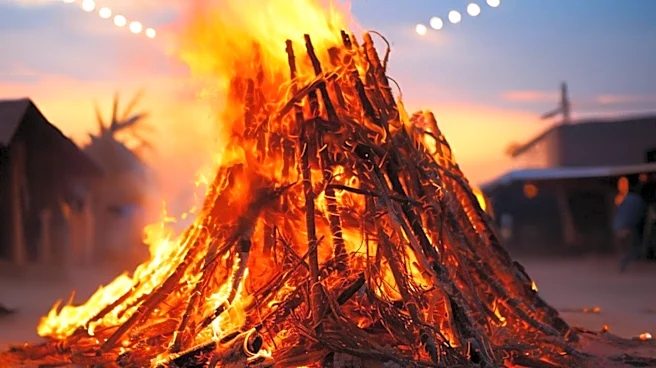
Finno-Ugric Capital of Culture. This marks the first time a city outside the traditional Ugric regions of Finland, Estonia, or Russia has received this honor. The festival, deeply rooted in Finnish traditions, features rituals such as bonfires, known as kokko, which symbolize purification and protection. These traditions were brought to the Upper Peninsula by Finnish immigrants in the 1800s and have been preserved in Hancock's celebrations.
Why It's Important?
Hancock's designation as the Finno-Ugric Capital of Culture highlights the city's significant Finnish heritage and its role in preserving these cultural traditions in the United States. This recognition not only boosts local pride but also attracts international attention, potentially increasing tourism and cultural exchange. The festival serves as a cultural bridge, connecting Finnish Americans with their ancestral roots and promoting understanding of Finnish customs. It underscores the importance of cultural preservation and the role of immigrant communities in enriching the cultural tapestry of the U.S.
What's Next?
As Hancock prepares to host the 2026 Finno-Ugric Capital of Culture celebrations, the city is likely to see increased interest from cultural tourists and scholars. This could lead to further investment in cultural infrastructure and events, enhancing the city's profile as a center for Finnish-American heritage. Local businesses and cultural organizations may collaborate to expand the festival's offerings, potentially incorporating more educational and interactive elements to engage visitors. The recognition may also inspire other U.S. cities with significant immigrant populations to celebrate and preserve their unique cultural heritages.
Beyond the Headlines
The recognition of Hancock as a cultural capital outside the traditional Ugric regions highlights the global diaspora's role in maintaining cultural traditions. It raises questions about how immigrant communities adapt and preserve their heritage in new environments. The festival's success could encourage other ethnic communities in the U.S. to seek similar recognition, fostering a broader appreciation for cultural diversity. Additionally, the event may prompt discussions on the importance of cultural heritage in shaping community identity and cohesion.