

What's Happening?
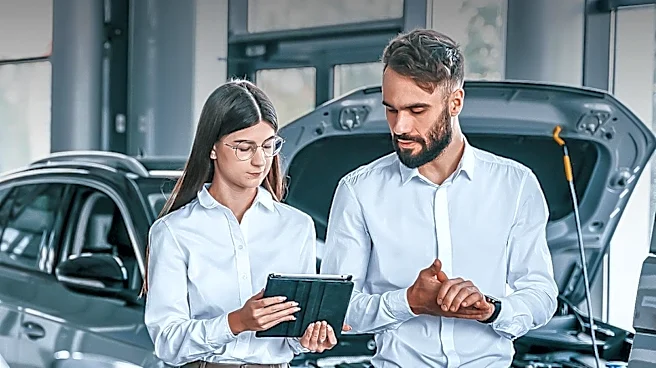
Scout Motors, a new electric vehicle brand revived by the Volkswagen Group, is developing an extensive sales and service network across the U.S. and Canada. The company plans to establish 90 workshops, averaging 35,000 square feet each, with approximately
80% of the space dedicated to vehicle maintenance and servicing. These workshops will also offer demo drives, sales consultations, displays, accessories, and merchandise. In addition to these larger service centers, Scout Motors will open retail stores, termed 'connection centers,' in 18 key U.S. metro areas. These smaller outlets, ranging from 1,500 to 3,000 square feet, will be located in various settings, including malls, to provide demo drives, merchandise, and brand information. The company is also planning several 'flagship-style locations' up to 50,000 square feet, starting with a Scout Experience Center in South Carolina, which will include a workshop, support new-vehicle deliveries, and offer off-roading experiences. This strategy underscores Scout's commitment to a direct-to-consumer sales model for its Terra pickup and Traveler SUV, despite facing opposition from traditional franchised dealerships and industry associations.
Why It's Important?
Scout Motors' direct-to-consumer sales model represents a significant disruption to the traditional automotive dealership landscape in the U.S. By bypassing franchised dealerships, Scout aims to control the customer experience from sales to service, potentially offering a more streamlined and consistent brand interaction. This approach challenges established industry norms and has already drawn strong rebukes from organizations like the National Automobile Dealers Association, leading to lawsuits. If successful, Scout's model could influence other emerging EV manufacturers or even established automakers to reconsider their distribution strategies, potentially shifting power dynamics within the automotive retail sector. Consumers might benefit from potentially lower prices due to reduced intermediary costs and a more direct relationship with the manufacturer, while existing dealerships could face increased competition and pressure to adapt their business models. The extensive network of workshops also signals a commitment to after-sales service, which is crucial for consumer confidence in a new automotive brand.
What's Next?
Scout Motors plans to begin delivering its Terra and Traveler models to customers in 2028. Leading up to this, the company will continue to develop its network of connection centers and workshops across the U.S. and Canada. The initial Scout Experience Center in South Carolina will likely serve as a blueprint for future flagship locations. The ongoing legal challenges and industry opposition regarding its direct-to-consumer sales model will also be a critical factor to watch. How these legal battles unfold could set precedents for other manufacturers looking to adopt similar sales strategies. Scout's ability to convert its 212,000 existing reservations into official orders and successfully scale its manufacturing and service operations will be key indicators of its future success. The company's expansion into key metro areas and strategic placement of workshops on the West and East Coasts, Southeast, and Midwest suggests a targeted rollout to capture significant market share.
Beyond the Headlines
The emergence of Scout Motors and its direct-to-consumer strategy highlights a broader trend in the automotive industry towards disintermediation, driven by the rise of electric vehicles and evolving consumer expectations. This shift could lead to a re-evaluation of franchise laws and regulations that have historically protected traditional dealerships. The legal battles initiated by dealer associations underscore the deep-seated interests and economic structures at play. Beyond the immediate business implications, this model could foster greater innovation in customer service and vehicle maintenance, as manufacturers have direct feedback loops with their customers. It also raises questions about the future role of physical retail spaces in an increasingly digital economy, with Scout's plan for smaller 'connection centers' in malls reflecting a hybrid approach. The success or failure of Scout's model could serve as a case study for how new automotive brands can effectively enter and compete in a highly regulated and established market.