







What's Happening?
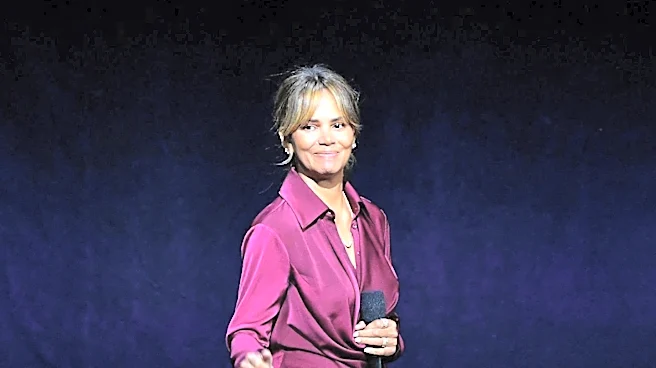
Halle Berry continues to hold the distinction of being the only Black woman to win the Academy Award for Best Actress. She received this honor in 2002 for her performance in 'Monster's Ball.' More than two decades later, this record remains unbroken,
highlighting a significant aspect of the Academy's history concerning Black actresses. While Black actresses have achieved multiple wins in the Best Supporting Actress category, including Viola Davis for 'Fences' and Zoe Saldaña for 'Emilia Pérez,' Berry's lead actress win stands alone. Beyond her historic Oscar, Berry has also cultivated a substantial commercial career, featuring in major film franchises such as the 'X-Men' series, 'Die Another Day,' and 'John Wick: Chapter 3 – Parabellum.' Her career spans three decades, encompassing various genres including action, comedy, and drama.
Why It's Important?
Halle Berry's enduring status as the sole Black woman to win the Best Actress Oscar underscores persistent issues of representation and recognition within the U.S. film industry. This fact is frequently cited in discussions about diversity and inclusion in Hollywood, particularly concerning the Academy Awards. It highlights the slow pace of change in acknowledging and rewarding lead performances by Black women. The continued lack of other Black actresses in this specific category suggests systemic challenges that extend beyond individual talent, impacting career trajectories and opportunities for diverse performers. This situation influences public discourse on equitable representation in media and the arts, prompting ongoing calls for greater diversity in casting, storytelling, and award considerations. The industry's progress in this area is often measured against such benchmarks, making Berry's achievement a critical reference point.
What's Next?
The ongoing conversation about diversity in Hollywood and at the Academy Awards is expected to continue, with Halle Berry's unique achievement remaining a central point of reference. Industry stakeholders, including advocacy groups, filmmakers, and actors, will likely maintain pressure for more inclusive practices in casting and nominations. Future award seasons will be closely watched for any shifts in representation, particularly in lead acting categories. The film industry may see continued efforts to promote diverse narratives and talent, potentially leading to more opportunities for Black actresses in prominent roles. However, breaking Berry's two-decade-old record will require a sustained and significant change in how lead roles are conceived, funded, and recognized within the industry.
Beyond the Headlines
Halle Berry's singular achievement transcends a mere award; it symbolizes both a pinnacle of success and a stark reminder of the historical and ongoing underrepresentation of Black women in leading roles within Hollywood. This situation raises deeper questions about the types of stories being told, who gets to tell them, and whose experiences are deemed worthy of central narratives. The cultural impact extends to aspiring Black actresses, for whom Berry's win serves as both an inspiration and a testament to the immense barriers that still exist. It also prompts critical examination of the voting demographics and biases within the Academy itself, and how these factors shape the landscape of cinematic recognition. The longevity of this record highlights a broader societal issue regarding racial and gender equity in high-profile industries.