





What's Happening?
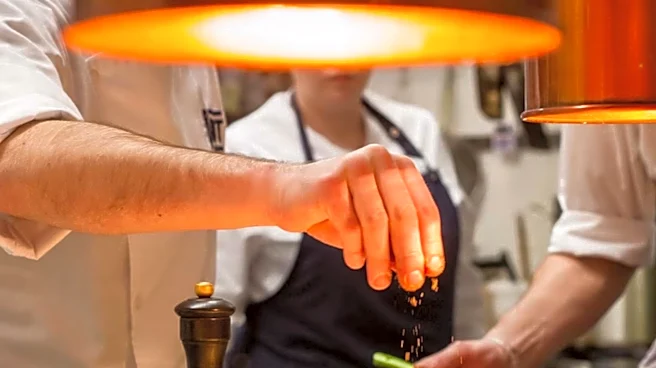
Oheka Castle, a historic estate on Long Island, is part of a growing trend where caviar is becoming a popular ingredient in upscale dining experiences across the region. The castle's kitchen, supplied by Paramount Caviar, is among many Long Island restaurants
incorporating caviar into their menus. This trend is fueled by social media, where influencers and food enthusiasts showcase caviar in various dishes, from bagels to martinis. The allure of caviar, traditionally a symbol of luxury, is being embraced by establishments like Prime in Huntington and Arlo Kitchen & Bar in Northport, which offer caviar-topped lobster rolls and martinis. Despite its high-end reputation, caviar's use as a condiment is debated among culinary experts, with some cautioning against its overuse in dishes where it may overshadow other flavors.
Why It's Important?
The increasing popularity of caviar on Long Island reflects broader trends in the U.S. dining industry, where luxury ingredients are being democratized and made more accessible to a wider audience. This shift could impact local economies by boosting tourism and dining revenues, as restaurants attract patrons seeking unique culinary experiences. However, it also raises questions about sustainability and the ethical sourcing of caviar, as demand increases. The trend highlights a cultural shift towards experiential dining, where the spectacle and social media appeal of a dish can be as important as its taste. This could influence future restaurant offerings and marketing strategies, as establishments seek to capitalize on the social media-driven food culture.
What's Next?
As the caviar trend continues to grow, restaurants may explore new ways to incorporate it into their menus, potentially leading to innovative culinary creations. The focus on luxury dining experiences could also prompt discussions about the environmental impact of caviar production and the importance of sustainable sourcing practices. Additionally, the trend may inspire other regions to adopt similar luxury food trends, further influencing the national dining landscape. Stakeholders, including restaurant owners and suppliers, will likely monitor consumer responses and adjust their offerings to maintain relevance in a competitive market.
Beyond the Headlines
The caviar trend on Long Island underscores a broader cultural fascination with luxury and exclusivity in dining. It raises questions about the role of social media in shaping consumer preferences and the potential for food trends to drive economic and cultural shifts. The emphasis on high-end ingredients like caviar may also reflect societal aspirations and the desire for status symbols, even in everyday dining experiences. This phenomenon could lead to a reevaluation of what constitutes luxury in the culinary world and how it is marketed to consumers.