






What's Happening?
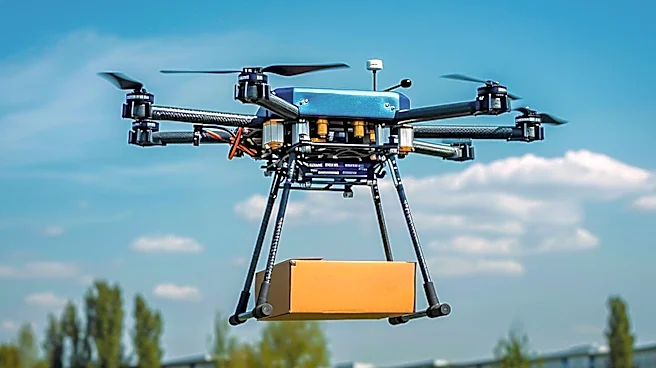
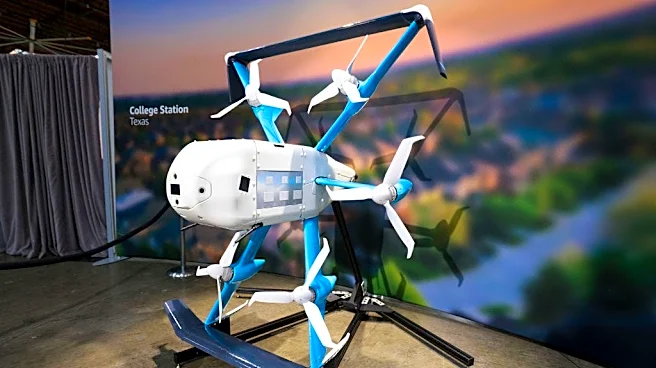
Amazon is significantly expanding its drone delivery service, Prime Air, to nearly 500 U.S. cities and towns by the end of this year. This expansion represents a sixfold increase in its drone network footprint, aiming to reach tens of millions of customers.
The company announced plans to extend drone deliveries to metro areas including Chicago, Syracuse, Cleveland, and Atlanta, among others. Currently, Amazon's drone operations are active in locations such as San Antonio, Texas; Baton Rouge, Louisiana; and Kansas City, Kansas. The service allows for the delivery of items weighing five pounds or less that fit into a large shoebox, with deliveries possible in as little as 30 minutes. Prime members receive free delivery for orders of $50 or more, while non-Prime members pay $4.99 per delivery, and Prime members pay $2.99 for orders under $50. Despite delivering hundreds of thousands of packages by drone this year, this volume remains a small fraction of the nearly 20 million packages Amazon delivers daily in the U.S., according to ShipMatrix.
Why It's Important?
This expansion signifies Amazon's continued commitment to drone delivery, a long-term vision that could reshape the logistics and retail industries in the U.S. The move aims to enhance delivery speed, a core competitive advantage for Amazon, and potentially reduce reliance on human drivers in the long run. For consumers, it offers the promise of faster, more convenient access to goods, particularly in suburban areas where the service is primarily focused due to operational constraints. For the broader U.S. economy, successful scaling of drone delivery could lead to job creation in drone manufacturing, maintenance, and operations, while potentially displacing some traditional delivery roles. It also highlights the ongoing technological race among e-commerce giants like Walmart, which is also investing in drone delivery, to optimize supply chains and meet evolving customer expectations. Regulatory bodies, particularly the Federal Aviation Administration (FAA), will play a critical role in shaping the future of this technology, as they continue to develop standards for safe and widespread drone operations. The expansion also brings into focus issues of noise pollution and community acceptance, which have been challenges in previous pilot programs.
What's Next?
Amazon's immediate next steps involve the phased rollout of drone delivery services in the newly announced cities and towns. This will entail establishing the necessary infrastructure, obtaining local permits, and potentially hiring and training personnel for drone operations. The company will likely continue to address regulatory challenges, particularly regarding FAA approvals for longer flights beyond an operator's line of sight and the use of special wireless frequencies for drone navigation. Further technological advancements are anticipated, especially in battery life, sound reduction, and increasing the operational range of the drones to reach more rural areas. Amazon will also need to manage public perception and address concerns from residents regarding noise and privacy. The success of this expansion could influence other companies to accelerate their drone delivery initiatives, potentially leading to a more competitive landscape in last-mile logistics. The long-term vision includes a significant shift in how goods are transported, with implications for urban planning, infrastructure development, and environmental impact.
Beyond the Headlines
Beyond the immediate logistical and economic implications, Amazon's drone delivery expansion touches upon deeper societal and ethical considerations. The increasing automation of delivery services raises questions about the future of work, particularly for human delivery drivers, and the potential for job displacement. There are also significant privacy concerns related to drones flying over residential areas and potentially collecting data. The environmental impact of widespread drone use, including energy consumption and noise pollution, will need careful assessment as the technology scales. Furthermore, the integration of autonomous drones into civilian airspace presents complex safety and security challenges that require robust regulatory frameworks and public trust. This initiative represents a step towards a future where autonomous systems play a much larger role in daily life, prompting broader discussions about the balance between technological convenience, economic efficiency, and societal well-being. The success or failure of Amazon's ambitious drone program could set precedents for how other autonomous technologies are adopted and regulated in the U.S. and globally.