




What's Happening?
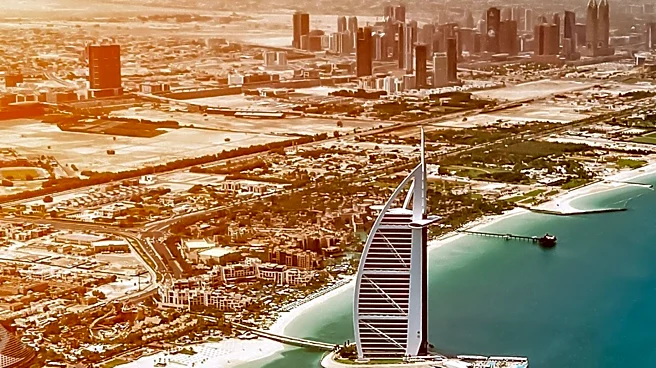
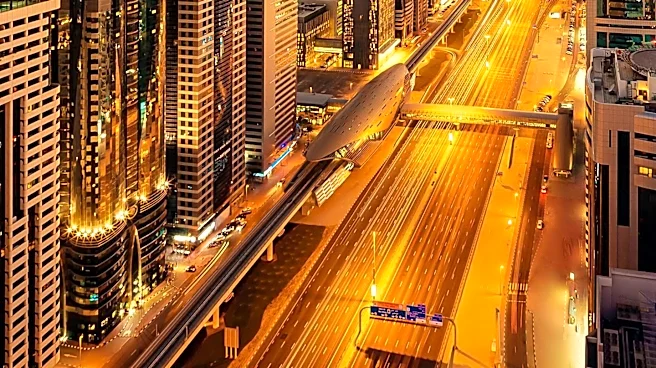
The United Arab Emirates (UAE), particularly Dubai and Abu Dhabi, is experiencing a reduction in international investor options due to a slump in initial public offerings (IPOs), an increase in buyouts, and highly concentrated ownership structures. Despite
years of efforts to open stock markets and establish Dubai and Abu Dhabi as financial centers, a significant portion of company ownership remains with a few shareholders. This limits the amount of stock available for trading. For instance, over 40% of companies on Dubai’s benchmark index have two shareholders controlling more than 70% of the equity, a trend also prevalent in Abu Dhabi. This concentration, coupled with a slowdown in new listings—only one this year—and a series of buyouts, is tightening market constraints. Recent examples include Emaar Properties PJSC's proposal to buy out its construction arm, following similar transactions in Abu Dhabi. This situation is leading to a decrease in market depth and investment opportunities for public shareholders.
Why It's Important?
The shrinking investor options in Dubai and Abu Dhabi have significant implications for the UAE's ambition to attract global capital and enhance its financial markets. Concentrated ownership structures can deter minority investors, as their influence is limited when controlling shareholders decide on major corporate actions like consolidation, mergers, or privatization. This lack of liquidity and limited free float makes it challenging for outside investors to acquire or divest substantial positions, potentially reducing the attractiveness of these markets compared to others with more dispersed ownership, such as Saudi Arabia. The trend of buyouts and delistings, while offering immediate cash exits for minority shareholders, risks undermining the long-term goal of building robust and liquid stock exchanges. This could impact the UAE's economic diversification efforts and its standing as a global financial hub, as a healthy pipeline of IPOs and broader institutional participation are crucial for market growth and investor confidence.
What's Next?
To counter the current trend, market analysts, such as Shahrukh Saleem from Mashreq Capital, emphasize the need for more IPOs to replenish the market and increase the free float of shares. The UAE's Capital Market Authority states that its merger and acquisition rules align with international standards, aiming to balance corporate restructuring with investor protection. Both the Dubai Financial Market and the Abu Dhabi exchange are focused on deepening liquidity and broadening access for investors, with foreign investors already accounting for a significant portion of traded value. However, the proposed delisting of Emaar Development PJSC, which accounts for about 7% of Dubai Financial Market’s annual traded value, could further reduce liquidity. Future developments will likely involve a continued push for new listings and potential regulatory adjustments to encourage broader share distribution, aiming to balance consolidation with sustained market growth and investor participation.
Beyond the Headlines
The issue of concentrated ownership in the UAE's financial markets highlights a broader challenge faced by emerging markets where state-backed entities or founding families often retain significant control. While such structures can provide stability and long-term vision, they can also stifle market dynamism and limit opportunities for diverse investor participation. The current situation in Dubai and Abu Dhabi underscores a tension between the desire for strategic control by major shareholders and the need for market liquidity and transparency to attract international institutional investors. This dynamic can lead to a cyclical pattern of IPO droughts followed by delistings, as seen during the COVID-19 pandemic. Addressing this requires not only regulatory frameworks that protect minority shareholders but also a cultural shift towards more dispersed ownership and a consistent pipeline of new, investable companies to ensure the long-term health and global competitiveness of these financial centers.