



What's Happening?
Actress Brenda Song, known for her role as London Tipton in Disney's 'The Suite Life of Zack & Cody' and its spin-off 'The Suite Life on Deck,' has publicly stated that she felt 'underpaid and overworked' during her time on the popular Disney Channel
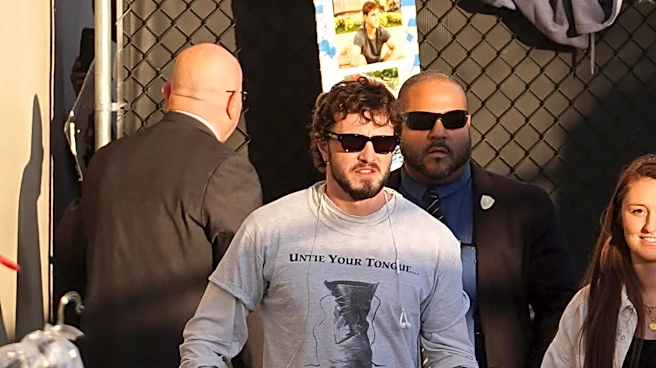
shows. Speaking on former co-star Dylan Sprouse's 'Wildmen' podcast, Song reflected on her experience, noting that parts of her life during that period feel like 'black holes' due to the demanding schedule. Sprouse himself revealed that he received only one residual check for five cents from a crossover episode with 'Hannah Montana,' despite the show's significant popularity. The actors also discussed the practice of filming 'wraparound episodes,' where scenes from future episodes were shot in advance, which they claim did not result in additional payment for them. Song acknowledged that Disney provided a significant platform for her career but highlighted the challenging working conditions.
Why It's Important?
These allegations from Brenda Song and Dylan Sprouse shed light on the compensation and working conditions for child actors in the entertainment industry, particularly within major studios like Disney. The claims of underpayment and extensive work hours, coupled with minimal to no residuals for highly successful shows, raise questions about fair labor practices and the long-term financial security of young performers. This situation could prompt further scrutiny from industry unions, advocacy groups, and potentially lead to discussions about reforming contracts and payment structures for child actors. It also highlights a broader issue within Hollywood regarding residual payments in the streaming era, where older contracts may not adequately compensate creators and performers for the continued value of their work. The experiences shared by Song and Sprouse could empower other former child stars to come forward with similar stories, potentially leading to collective action or policy changes.
What's Next?
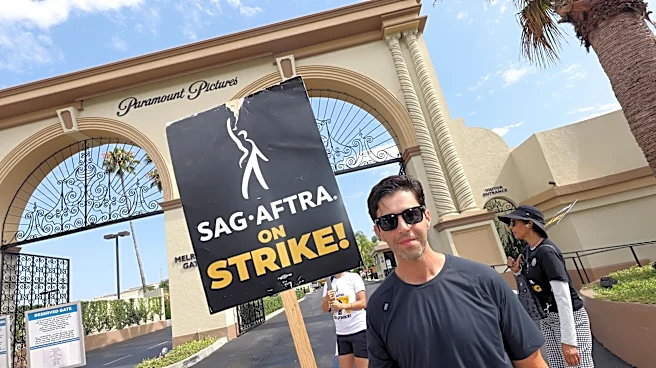
The revelations from Brenda Song and Dylan Sprouse may spark further conversations within the entertainment industry regarding the treatment and compensation of child actors. While Disney has not yet commented on the allegations, increased public awareness could pressure the studio and others to review their historical and current contractual agreements with young talent. Industry unions, such as SAG-AFTRA, might face renewed calls to negotiate stronger protections and more equitable residual structures for performers, especially those who begin their careers as minors. This could lead to new clauses in future contracts or even legislative efforts aimed at safeguarding child performers' financial interests and working conditions. The discussion could also encourage other former child stars to share their experiences, potentially forming a larger movement for reform within the industry.
Beyond the Headlines
The experiences described by Brenda Song and Dylan Sprouse touch upon deeper ethical and systemic issues within the entertainment industry concerning child labor and intellectual property rights. The concept of 'black holes' in memory due to overwork points to potential psychological impacts on young performers, raising questions about the long-term well-being of child stars beyond their immediate financial compensation. The alleged lack of proper compensation for 'wraparound episodes' and minimal residuals highlights a potential exploitation of labor, where creative work is utilized without commensurate payment, especially when shows continue to generate revenue through syndication or streaming. This situation underscores the power imbalance between major studios and individual actors, particularly minors, who may lack the leverage or understanding to negotiate favorable terms. It also brings to the forefront the ongoing debate about how intellectual property and creative contributions are valued and compensated in an evolving media landscape.