




What's Happening?
Physical AI is defined as artificial intelligence that perceives, reasons, and acts in the real world through machines such as robots and robotaxis. This technology involves a continuous loop of sensing, deciding, acting, and then sensing again. Unlike
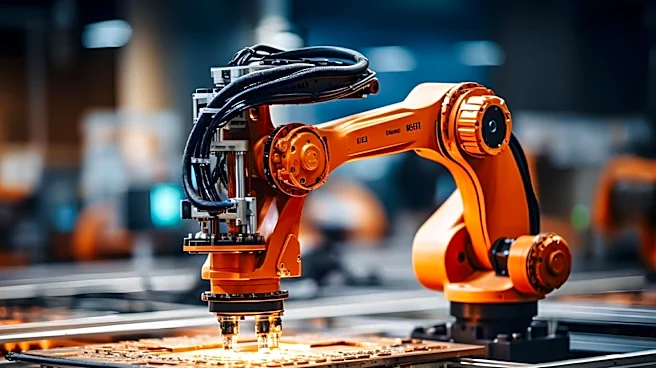
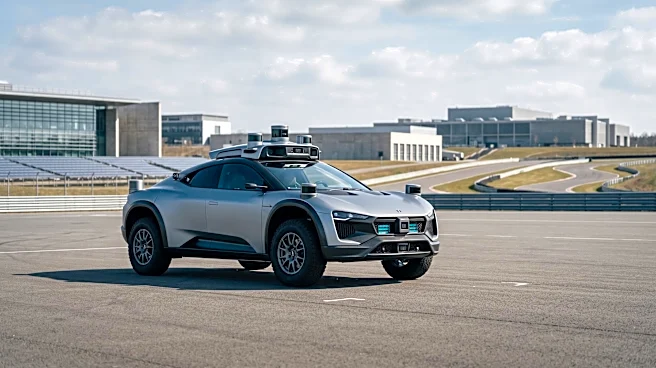
conventional AI, Physical AI brings intelligence into the physical environment, enabling machines to perceive their surroundings, make autonomous decisions, and execute actions. Major entities like Nvidia, EY, and a 2026 arXiv survey characterize Physical AI by its ability to help autonomous machines 'perceive, reason about, and act in the real world.' Examples include warehouse robots navigating around obstacles, robot arms adjusting their grip, surgical robots learning tasks, and robotaxis processing sensor data for changing road conditions. The core distinction from traditional robotics is autonomy; if a machine's actions are dictated by human-written rules, it's automated, but if it perceives and chooses based on a model, it falls under Physical AI.
Why It's Important?
The rise of Physical AI signifies a transformative shift in various U.S. industries, promising smarter, safer, and faster operations. In manufacturing, it can lead to highly efficient and adaptable production lines, reducing human error and increasing output. The automotive sector stands to benefit significantly from advanced robotaxis, potentially revolutionizing transportation and logistics by enhancing safety and efficiency, as evidenced by Waymo's extensive rider-only miles. Healthcare can see advancements in surgical precision and patient care through intelligent robotic assistance. Furthermore, the integration of Physical AI with digital twins allows for sophisticated simulations and predictive maintenance, optimizing asset performance and reducing downtime across diverse facilities. This technology is poised to create new competitive advantages for companies that adopt it, driving innovation and progress by enabling machines to operate autonomously in complex and unpredictable environments.
What's Next?
The development and deployment of Physical AI are expected to accelerate, with continued advancements in machine learning models and hardware capabilities. Companies like Nvidia are focusing on frameworks where models are trained on real and synthetic data, tested in simulations, and then deployed for real-time decision-making directly on robots, vehicles, or industrial machines. This approach suggests a future where autonomous systems become increasingly sophisticated and integrated into daily operations. The ongoing research and industry adoption will likely lead to more widespread use of Physical AI in logistics, healthcare, and transportation, pushing the boundaries of what autonomous machines can achieve. Further regulatory frameworks and ethical considerations will also likely emerge as these technologies become more prevalent in public and industrial settings.
Beyond the Headlines
The deeper implications of Physical AI extend to fundamental questions about human-machine interaction and the nature of intelligence itself. While robotics focuses on building machines, Physical AI provides the intelligence layer, blurring the lines between automated tools and truly autonomous agents. This evolution could lead to significant societal changes, including shifts in labor markets as machines take on more complex physical tasks. Ethical considerations around decision-making in autonomous systems, particularly in safety-critical scenarios like robotaxis, will become paramount. The distinction between 'physical AI' (industry term) and 'embodied AI' (research term) highlights ongoing academic and commercial discussions about how intelligence manifests and learns through interaction with the physical world, potentially reshaping our understanding of artificial general intelligence.