








What's Happening?
NASA and commercial space companies are increasingly focusing on the moon as a significant economic opportunity. The moon's surface is believed to contain valuable resources such as water ice, hydrogen, and helium-3, which could support sustained human
presence and enable new industries. Recent missions, including NASA's Artemis 2 and Firefly Aerospace's Blue Ghost, have marked significant milestones in lunar exploration. These missions are part of a broader strategy to establish a permanent human presence on the moon, involving infrastructure development and resource extraction. The U.S. Congress's support is crucial for sustaining these programs, as political will is needed to maintain funding and momentum.
Why It's Important?
The moon's potential resources could revolutionize industries by providing materials for energy production and technological advancements. The economic impact is projected to be substantial, with the global space economy expected to grow significantly. The U.S. aims to lead in this new lunar economy, which could drive technological innovation and economic growth. Successful lunar missions could also reduce the cost of space travel and resource extraction, making space more accessible. However, achieving these goals requires continued investment and political support to ensure the development of necessary technologies and infrastructure.
What's Next?
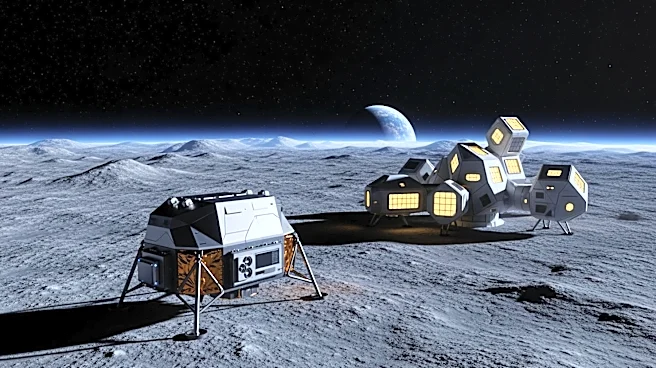
Future plans include more robotic and crewed missions to the moon, with a focus on establishing a permanent base. This involves deploying larger landers to pre-position supplies and equipment, followed by human missions to operate and expand lunar infrastructure. The U.S. Congress is expected to play a critical role in funding these initiatives, ensuring that NASA and commercial partners can continue their efforts. The expansion of the Commercial Lunar Payload Services program is also anticipated, providing more opportunities for private companies to contribute to lunar exploration.