




What's Happening?
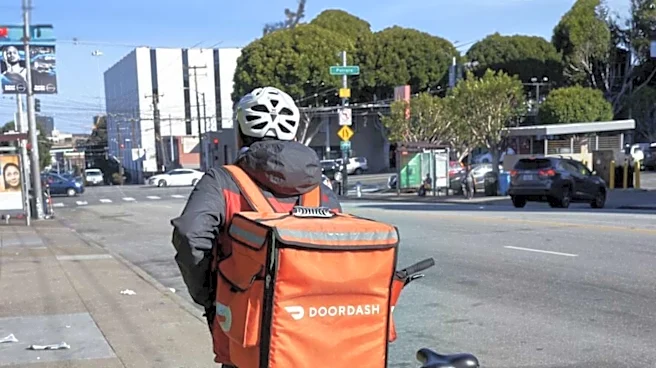
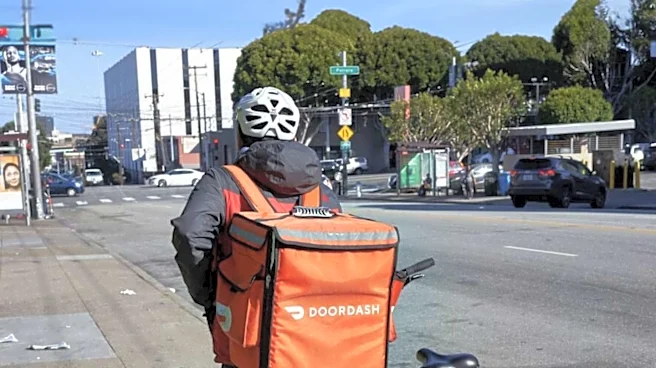
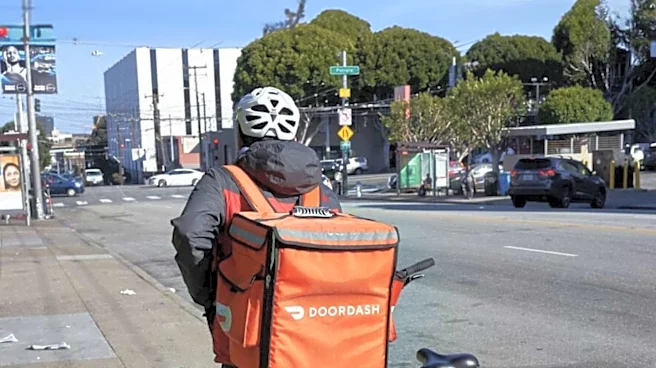
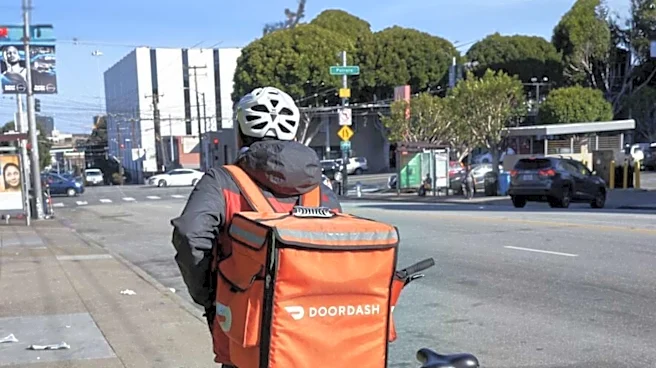
DoorDash CEO Tony Xu has reported that third-party AI agents, such as Meta’s Muse, Instinct, and Fo, have generated only 'several hundred' orders in total for the platform. This figure is remarkably low when compared to the 993 million orders DoorDash completed
in the third quarter of 2026 alone. Xu acknowledged the trend of agentic commerce, stating, 'You never want to fight gravity,' but emphasized that customers overwhelmingly continue to place orders directly through the DoorDash app. This sentiment is echoed across the tech industry, with other major players like Uber and Amazon also observing limited traction for external AI agents. Uber's CFO, Balaji Krishnamurthy, noted that AI agents accounted for only four rides and approximately 500 Uber Eats orders during Halloween week, out of 320 million total transactions. Amazon's Andy Jassy similarly stated that few customers use outside shopping agents, finding the experience 'still not great, nor more convenient than coming to a retailer directly.'
Why It's Important?
The minimal adoption of third-party AI agents for ordering on platforms like DoorDash, Uber, and Amazon highlights a critical challenge for the burgeoning agentic commerce sector. While there was significant hype surrounding these AI assistants, their current impact on transaction volumes is negligible. This suggests that despite advancements in AI, consumers still prefer direct interaction with established apps for their convenience and trust. For DoorDash, this indicates that their existing app-centric model remains robust and largely unaffected by external AI intermediaries. The low numbers also imply that the value proposition of these third-party agents is not yet compelling enough to shift consumer behavior, particularly for simple, low-decision transactions like ordering a ride or a single meal. This trend could influence investment and development strategies within the AI and e-commerce sectors, potentially leading companies to focus more on enhancing their in-app AI capabilities rather than relying on external agents.
What's Next?
The limited success of third-party AI agents may prompt a re-evaluation of their integration strategies by both AI developers and platform companies. While DoorDash and Uber are open to working with external assistants on negotiated terms, the current data suggests that platforms will likely prioritize developing and enhancing their own in-app AI assistants. Uber, for instance, already has a Cart Assistant and an in-app voice agent, while DoorDash has 'Ask DoorDash.' These internal tools aim to improve user experience and increase basket sizes, as evidenced by reports that in-app AI assistants lead to larger orders. The future will likely see a continued focus on internal AI development by major platforms to maintain direct customer relationships and control the user experience, while external AI agents may need to demonstrate a more significant value proposition, particularly in complex, high-decision purchasing scenarios, to gain broader adoption.
Beyond the Headlines
The disparity in AI agent adoption between high-decision and low-decision transactions reveals a deeper insight into consumer behavior and the utility of AI. AI agents appear to be more effective in scenarios requiring multiple choices, such as grocery shopping, where they can streamline complex decisions. Conversely, for simple tasks like ordering a ride, where the app has already minimized decision-making, AI agents offer little added value. This suggests that the 'agentic commerce' revolution may not be a universal shift but rather a targeted evolution, impacting specific types of transactions more profoundly than others. Companies like DoorDash, by focusing on their own in-app AI and potentially leveraging acquisitions like Instacart, are positioning themselves to capture value in these 'long basket' scenarios. This strategic differentiation could lead to a bifurcated market where platforms either become the primary AI agent for complex purchases or provide access for external agents in simpler, less critical transactions, thereby shaping the future landscape of digital commerce.