




What's Happening?
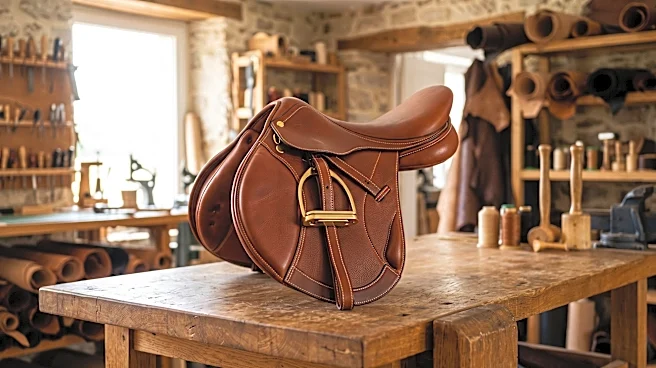
Hermès, a globally recognized luxury brand, has evolved from a small Parisian workshop founded in 1837 by Thierry Hermès into a multi-billion dollar empire. Initially specializing in meticulously crafted harnesses and horse tack, the company adapted to changing
times by expanding into suitcases, bags, clothing, and accessories as automobiles replaced horses. Key innovations included securing exclusive rights to the zipper closure system in France in 1922. The brand gained international fame with iconic products like the Kelly bag, named after Princess Grace Kelly in 1956, and the Birkin bag, conceived in 1984 after a chance encounter between Jean-Louis Dumas and Jane Birkin. Today, Hermès is celebrated for its exclusive, handmade items and maintains a strong emphasis on traditional craftsmanship and quality control. The company reported revenues of approximately 16 billion euros in 2025, with a net profit of around 4.5 billion euros, and its market capitalization has reached hundreds of billions of dollars.
Why It's Important?
The transformation of Hermès highlights the enduring power of brand heritage, adaptability, and commitment to craftsmanship in the global luxury market. Its success demonstrates how a company can pivot from a niche product (horse equipment) to diverse luxury goods while maintaining its core identity and artisanal philosophy. This case study is significant for understanding long-term business sustainability and brand building in competitive industries. The brand's ability to command high prices and maintain exclusivity, even in a mass-produced world, underscores the value consumers place on quality, history, and limited availability. Furthermore, Hermès's continued family control, despite its global expansion and challenges like LVMH's stake acquisition, illustrates a model for preserving brand integrity and independence against corporate consolidation pressures, influencing strategies for other luxury houses aiming for similar longevity and market position.
What's Next?
Hermès is expected to continue its strategy of controlled growth, focusing on maintaining exclusivity and the artisanal quality of its products. The brand will likely further invest in its specialized workshops in France and uphold rigorous quality control to preserve its reputation. Given its strong financial performance, Hermès may explore strategic expansions into new luxury segments or geographical markets, albeit cautiously, to ensure brand integrity is not diluted. The ongoing challenge will be balancing increasing global demand with its commitment to limited production and handmade craftsmanship. The company's family leadership will likely continue to prioritize long-term brand value over short-term gains, potentially influencing its approach to digital engagement and sustainability initiatives within the luxury sector.
Beyond the Headlines
Beyond its financial success, Hermès represents a cultural phenomenon where utility evolves into art and status. The brand's emphasis on 'saddle stitching' and the extensive hours required for each product underscore a philosophy that counters modern mass production, offering a tangible connection to traditional craftsmanship. This approach raises broader questions about consumer values in an increasingly digital and disposable world, highlighting a desire for authenticity, durability, and heritage. The scarcity and high demand for items like the Birkin bag also create a secondary market that reflects complex dynamics of wealth, desire, and social signaling. Ethically, Hermès's commitment to in-house production and artisan training provides a model for preserving traditional skills and supporting local economies, contrasting with outsourcing trends prevalent in other industries.