







What's Happening?
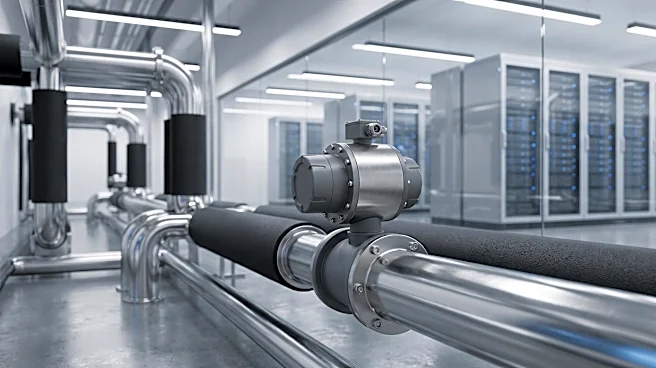
Emerson has launched its new Rosemount 8795 Magnetic Flow Sensor, specifically engineered for accurate flow measurement and monitoring in chilled water and water-glycol cooling systems within data centers. This sensor is designed to enhance the reliability
and efficiency of cooling systems, which are critical as data centers expand to meet growing digital infrastructure demands. The Rosemount 8795 integrates with Emerson's existing Rosemount magnetic flow transmitters and is built for simplified installation, commissioning, and ongoing system monitoring. It supports Emerson's Short Run Installation software, allowing for accurate flow measurement even in space-constrained environments where conventional straight pipe requirements cannot be met. The sensor offers 0.5% accuracy under specified conditions with no straight upstream pipe run and 0.2% accuracy with sufficient straight pipe lengths, along with 0.1% repeatability.
Why It's Important?
This development is crucial for the U.S. technology and infrastructure sectors, particularly for data centers. As digital infrastructure and computing demands continue to surge, data centers require increasingly efficient and reliable cooling systems to prevent overheating and ensure continuous operation. The Rosemount 8795 sensor directly addresses these needs by providing precise flow measurement, which is vital for optimizing energy consumption and maintaining stable operating temperatures. Improved cooling efficiency can lead to significant cost savings for data center operators through reduced energy bills and fewer system failures. Furthermore, the sensor's built-in diagnostics and integration capabilities with building management systems support better water and energy efficiency monitoring, aligning with sustainability goals and regulatory pressures for data centers to reduce their environmental footprint. This technology helps ensure the stability and performance of the digital backbone of the U.S. economy.
What's Next?
Emerson will likely focus on the widespread adoption of the Rosemount 8795 sensor within the data center industry. This will involve marketing efforts targeting data center operators, infrastructure developers, and engineering firms. The company may also offer training and support services to facilitate the integration and optimal use of the new sensor. Future developments could include further enhancements to the sensor's diagnostic capabilities, broader compatibility with various data center infrastructure management platforms, and potentially the development of new sensors for other critical data center applications. The success of this product could also spur competitors to innovate in the area of data center cooling system monitoring, leading to a more advanced and efficient market overall.
Beyond the Headlines
The introduction of advanced flow measurement technology like the Rosemount 8795 highlights the increasing sophistication required to manage the physical infrastructure supporting the digital world. The energy consumption of data centers is a growing concern, and innovations that improve efficiency are not just economic necessities but also environmental imperatives. This sensor's ability to provide accurate data for water and energy efficiency monitoring underscores a broader shift towards 'green' data centers. The long-term implications include a potential reduction in the carbon footprint of the digital economy, more resilient data storage and processing capabilities, and a greater emphasis on smart infrastructure management. This technology contributes to the ongoing effort to make digital services more sustainable and reliable, which is critical for national security and economic competitiveness.