



What's Happening?
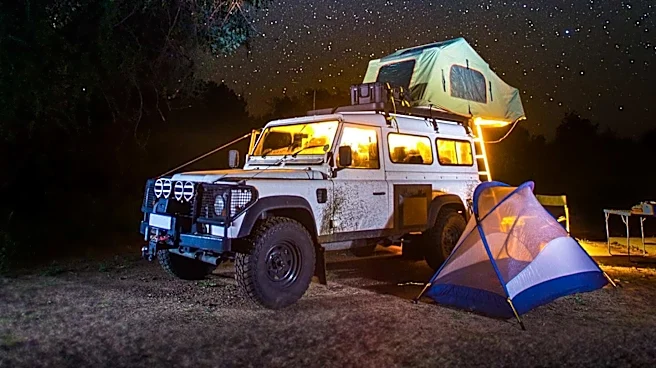
Headspace Campers has developed an integrated roof conversion for the Land Rover Defender 110, transforming the vehicle into an overland camper without significantly altering its original shape. The system adds only 140mm to the Defender 110's height
when closed, yet opens to reveal a dedicated elevated sleeping space with a full mattress, lighting, and storage. This conversion aims to provide the functionality of a camper while maintaining the Defender's iconic appearance and off-road capabilities. The Standard Model Package, priced at $16,826 (excluding engineering and installation), includes dual white LED cabin lights, a color-matched canvas organizer, integrated USB charging ports, and a zip-on front awning. A Premium package, costing $23,533, offers an 85mm thick mattress, upgraded lighting, dual ceiling-mounted fans, and integrated solar and auxiliary power connectivity. The company emphasizes that the conversion is largely reversible, preserving the vehicle's long-term value.
Why It's Important?
This innovation is significant for the U.S. outdoor recreation and automotive aftermarket industries, particularly for enthusiasts of off-road vehicles and overlanding. The ability to convert a high-value vehicle like the Land Rover Defender into a functional camper without permanent, extensive modifications addresses a key concern for owners regarding resale value and versatility. By offering a solution that integrates seamlessly and is reversible, Headspace Campers taps into a market segment that values both adventure and vehicle preservation. This could influence other aftermarket manufacturers to develop similar less-invasive conversion kits, potentially expanding the market for luxury and high-end overland modifications. The focus on integrated storage, weather protection, and power solutions also highlights a growing demand for self-sufficient and comfortable off-grid travel experiences, impacting related sectors such as portable power solutions and outdoor gear.
What's Next?
Headspace Campers is expected to continue refining and expanding its offerings, potentially developing similar integrated conversion kits for other popular 4x4 vehicles in the U.S. market. The company's emphasis on reversibility and minimal aesthetic impact could set a new standard for overland conversions, prompting competitors to innovate in similar directions. We may see increased partnerships between vehicle manufacturers and aftermarket companies to offer factory-approved or recommended conversion options. The success of this model could also lead to a greater focus on sustainable and less intrusive modifications within the overlanding community, influencing consumer preferences and product development. Furthermore, the demand for integrated power solutions and comfortable sleeping arrangements will likely drive advancements in portable solar technology and compact interior design for adventure vehicles.
Beyond the Headlines
The Headspace Campers conversion reflects a broader cultural shift towards experiential travel and a desire for self-reliance in outdoor adventures. It speaks to a growing segment of consumers who seek to combine the rugged capability of off-road vehicles with the comforts of home, moving beyond traditional RVs or basic rooftop tents. The reversibility aspect also touches upon the evolving relationship between vehicle ownership and lifestyle, allowing owners to adapt their vehicles to changing needs without a permanent commitment. This trend could foster a new appreciation for modular design in automotive accessories and influence how consumers view vehicle customization. Ethically, it promotes a more sustainable approach to vehicle modification by reducing the need for permanent alterations that might limit a vehicle's future utility or marketability, aligning with broader environmental consciousness in consumer choices.