





What's Happening?
The market for men's rings is undergoing a significant transformation, moving away from traditional, standardized designs towards more personalized and expressive options. Historically, men's rings were largely confined to wedding bands, class rings,
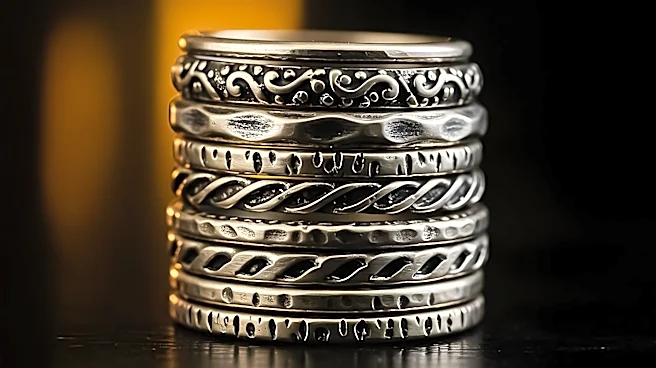
or family signets, primarily signifying commitment, status, or affiliation. However, there's a growing trend where men are selecting rings that reflect their individual tastes, relationships, and experiences. This shift is evident in the wider array of materials, finishes, and designs available, including unconventional metals like tungsten and titanium, varied surface treatments, and designs inspired by industrial objects or minimalist aesthetics. The change is driven by a desire for jewelry to be a deliberate expression of character rather than a mere symbolic object dictated by tradition. This evolution also reflects a broader loosening of gendered rules in adornment, allowing for more subtle yet distinct choices in men's jewelry.
Why It's Important?
This shift in the men's ring market signifies a broader change in consumer behavior and identity expression. It indicates that men are increasingly viewing jewelry as an integral part of their personal style, similar to how they approach sneakers, watches, or eyewear. This trend creates new opportunities for jewelry designers and retailers to cater to a more diverse and discerning male clientele, moving beyond a 'one-size-fits-all' approach. The emphasis on personal meaning over traditional symbolism also redefines value in the jewelry industry, where emotional connection and individual relevance can outweigh the cost of precious metals. This encourages innovation in materials and design, fostering a more dynamic and inclusive market. For consumers, it means greater freedom to choose pieces that genuinely resonate with their identity and lifestyle, moving away from societal expectations.
What's Next?
The foreseeable future for the men's ring market will likely see continued diversification in design, materials, and customization options. Jewelry brands are expected to further expand their offerings to include more varied relationship jewelry, allowing couples to express connection without identical designs. The growth of self-purchased jewelry by men for personal milestones or simply as part of their wardrobe will also drive demand for versatile and distinctive pieces. Social media and celebrity influence will continue to normalize a wider range of styles, encouraging further experimentation. Customization, such as engraving and material selection, will become even more central to the purchasing process, allowing buyers to imbue rings with unique personal significance. This trajectory suggests a market that is increasingly fragmented into niche aesthetics, catering to specific individual preferences rather than broad trends.
Beyond the Headlines
Beyond the immediate market trends, this evolution in men's rings reflects deeper cultural shifts regarding masculinity and self-expression. The declining expectation that men should conform to a narrow set of aesthetic choices in jewelry mirrors broader societal movements towards greater individuality and fluidity in gender roles. It highlights a growing comfort among men in engaging with fashion and accessories as tools for personal narrative, rather than solely for functional or status-driven purposes. This shift also challenges traditional notions of value, emphasizing the emotional and personal resonance of an object over its material worth. The increasing importance of 'story' behind a piece of jewelry suggests a more mindful consumption, where items are chosen for their connection to personal experiences and identity, fostering a more intimate relationship between the wearer and their adornment.