




What's Happening?
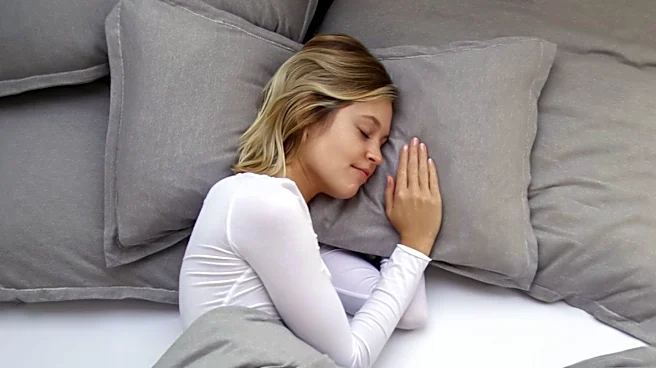
Recent research published in the journal Sexuality & Culture suggests that engaging in self-pleasure before bedtime is associated with falling asleep faster, experiencing better sleep quality, and having more positive emotions upon waking. The study,
conducted by Natalie Muleta and Michele Lastella from Central Queensland University, involved 301 participants aged 18 to 72. The researchers used an online survey to gather data on participants' self-pleasure habits and their perceived sleep quality. The study found that participants who engaged in self-pleasure before sleep reported falling asleep approximately nine minutes faster and experiencing better overall sleep quality compared to nights they did not engage in the practice. The research also explored the emotional impact of self-pleasure, finding that participants reported elevated mood levels immediately after the activity, which persisted until they fell asleep and continued into the next morning.
Why It's Important?
The findings of this study highlight the potential benefits of self-pleasure as a non-pharmacological method to improve sleep quality and emotional well-being. In a society where sleep disorders and stress are prevalent, these insights could inform new approaches to sleep therapy and stress management. By framing self-pleasure as a holistic, emotional experience rather than solely a physical act, the study challenges traditional views and suggests that it could be integrated into personalized sleep routines. This could have implications for sleep specialists and mental health professionals seeking alternative methods to enhance sleep and emotional health.
What's Next?
Future research could expand on these findings by incorporating objective physiological measurements, such as wearable sleep trackers, to validate the self-reported data. Additionally, exploring cultural differences and personal relationship dynamics could provide a deeper understanding of how self-pleasure influences sleep and dreams. These studies could lead to the development of tailored sleep interventions that incorporate self-pleasure as a relaxation technique, potentially benefiting individuals with sleep disturbances or high stress levels.
Beyond the Headlines
The study also touches on the continuity hypothesis of dreaming, suggesting that pre-sleep activities, such as self-pleasure, may influence the content of dreams. This aspect of the research opens up new avenues for understanding the relationship between waking experiences and dream content, which could have broader implications for dream analysis and psychological studies. Additionally, the study challenges societal norms and taboos surrounding self-pleasure, promoting a more open and positive discourse on the topic.