






What's Happening?
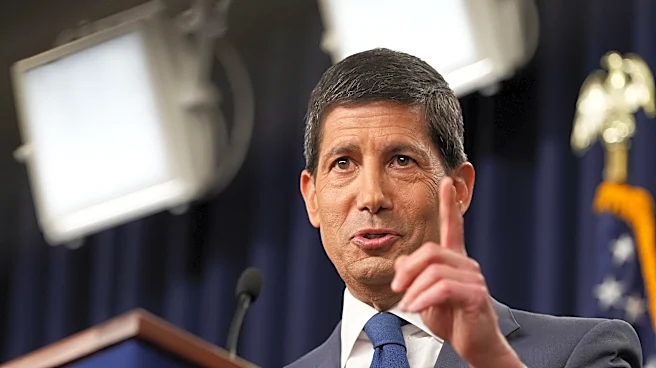
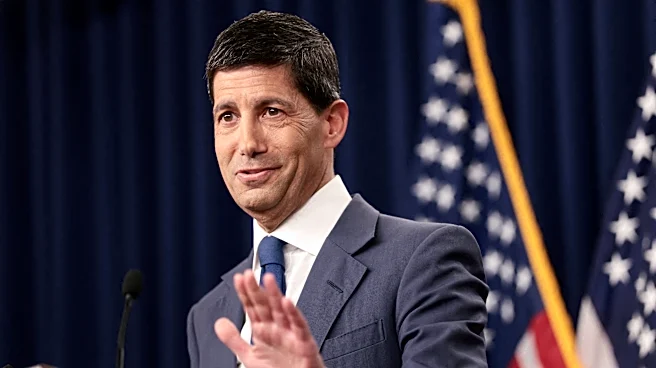
Brian Moynihan, CEO of Bank of America, the second-largest American bank, has stated that the American consumer is in a strong position despite ongoing geopolitical conflicts and high prices. He asserts that as long as the economy continues to grow, the national
debt and interest rates do not pose an immediate problem. However, Moynihan has expressed a critical view regarding the U.S. government's intervention in the bond market. This perspective comes amidst concerns from some critics who argue that the middle class and low-income earners in the U.S. are financially strained due to significant inflation since the pandemic, leading to increased reliance on discount stores, reduced spending on dining out, and accumulating credit card debt to cover daily living expenses. Additionally, the escalating national debt, with a budget deficit of 6 to 7%, is seen by some as unsustainable in the long term for the U.S., potentially limiting future fiscal policy flexibility.
Why It's Important?
Moynihan's assessment offers a significant perspective on the U.S. economic landscape from a major financial institution. His view that the American consumer is robust could influence investor confidence and market sentiment, potentially encouraging continued spending and investment. This outlook contrasts with concerns about inflation's impact on household budgets, highlighting a divergence in economic interpretations. If the consumer indeed remains strong, it could support sustained economic growth, benefiting various sectors from retail to services. Conversely, if the underlying financial strain on middle and low-income households is more severe than acknowledged, it could lead to future economic instability, impacting consumer spending and increasing default rates on credit. His critical stance on government bond market intervention also signals potential friction between the financial sector and federal economic policies, which could affect future regulatory discussions and the stability of financial markets.
What's Next?
The ongoing debate between the perceived strength of the American consumer and the financial pressures faced by many households will likely continue to be a key economic indicator. Financial institutions like Bank of America will closely monitor consumer spending patterns, credit card debt levels, and savings rates to refine their economic forecasts. The U.S. government's approach to bond market interventions and fiscal policy will also remain under scrutiny, with potential for further discussions on the sustainability of the national debt. Future economic reports on inflation, employment, and consumer confidence will provide more data points to either support or challenge Moynihan's optimistic view on the consumer. The interplay between these factors will shape monetary policy decisions by the Federal Reserve and fiscal strategies by Congress, impacting interest rates and overall economic growth.
Beyond the Headlines
The differing views on the health of the American consumer underscore a broader societal and economic challenge: how to reconcile aggregate economic indicators with the lived experiences of diverse income groups. While overall economic growth might appear strong, the distribution of that prosperity and the impact of inflation on different segments of the population can vary significantly. This situation raises questions about the effectiveness of current economic policies in ensuring equitable financial well-being. The accumulation of credit card debt to cover essential living costs, as highlighted by critics, points to potential vulnerabilities within the consumer base that could manifest as systemic risks if not addressed. Furthermore, the discussion around government intervention in bond markets touches upon the fundamental role of government in a market economy and the balance between stimulating growth and maintaining fiscal discipline, with long-term implications for national economic sovereignty and stability.