




What's Happening?
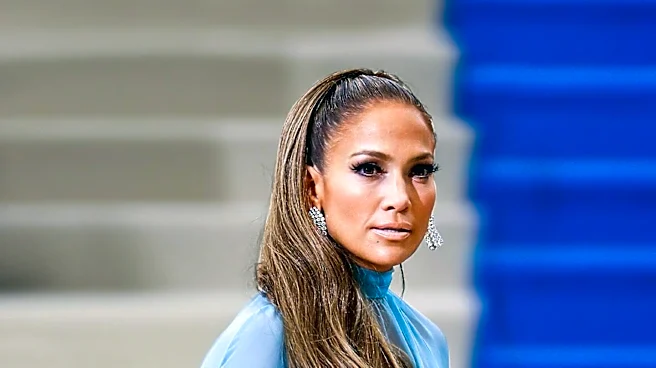
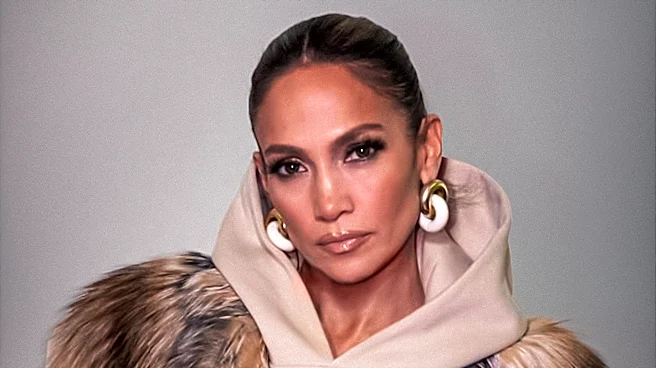
Jennifer Lopez recently discussed the significant progress of Latin music during a conversation with New York Times Popcast hosts Joe Coscarelli and Jon Caramanica. Lopez, a prominent figure during the 'Latin explosion' of the late 1990s and early 2000s,
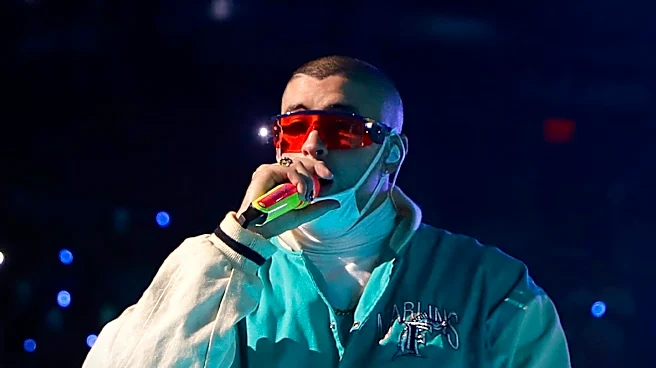
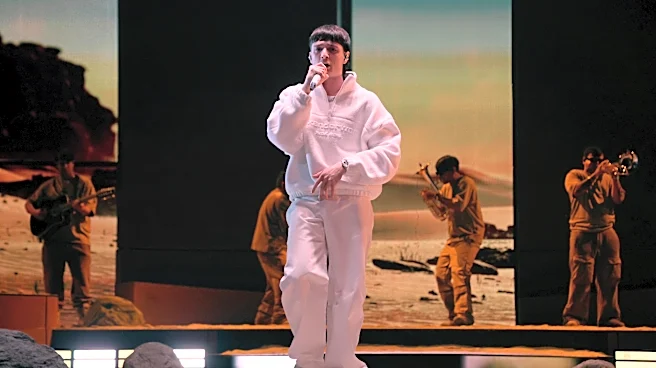
highlighted how contemporary artists like Bad Bunny, Karol G, and Rosalía have achieved major success while performing predominantly in Spanish. She contrasted this with her own experience and that of her peers, such as Ricky Martin, Gloria Estefan, and Marc Anthony, who, under the guidance of record executive Tommy Mottola at Sony, often had to sing in English to gain mainstream recognition. Lopez expressed pride in the current generation's ability to maintain their cultural and creative identities without needing to adapt to English-language markets.
Why It's Important?
This shift in the music industry signifies a profound cultural and economic impact within the U.S. and globally. The ability of Spanish-language artists to achieve mainstream success without linguistic compromise reflects a growing acceptance and demand for diverse cultural expressions. This trend empowers Latin artists to authentically represent their heritage, potentially leading to more diverse content in media and entertainment. Economically, it opens new markets and revenue streams for the music industry, as artists can connect with a broader audience while retaining their original fan base. For U.S. society, it underscores the increasing influence of Hispanic culture and the breaking down of traditional barriers in entertainment, fostering a more inclusive cultural landscape.
What's Next?
The continued success of Spanish-language music is likely to encourage more artists to embrace their native languages and cultural identities, potentially leading to a further diversification of mainstream music. This trend could also influence other entertainment sectors, such as film and television, to feature more Spanish-language content and artists. Record labels and streaming platforms are expected to continue investing in and promoting Spanish-language music, recognizing its growing commercial viability and cultural significance. This could lead to more collaborations between English and Spanish-speaking artists, further blurring linguistic lines in popular music and expanding the global reach of Latin music.
Beyond the Headlines
The evolution of Spanish-language music, as observed by Jennifer Lopez, points to a deeper cultural phenomenon: the increasing power of diverse communities to shape mainstream culture on their own terms. This development challenges the historical dominance of English in global entertainment and reflects a broader societal shift towards valuing authenticity and cultural heritage. It also highlights the changing demographics within the U.S., where the Hispanic population is a significant and growing consumer base. This movement could inspire other minority language groups to push for greater representation in media, fostering a more multilingual and multicultural entertainment landscape that truly reflects global diversity.