




What's Happening?
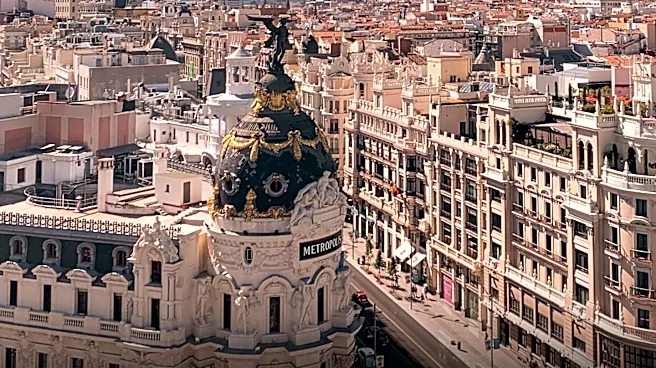
Madrid is establishing itself as a comprehensive destination that extends far beyond its city center, offering a rich tapestry of culture, history, gastronomy, and luxury. The city is recognized for its cultural institutions, including the 'golden triangle
of art' formed by the Prado Museum, Reina Sofia Museum, and Thyssen-Bornemisza National Museum, which house masterpieces from various eras. Beyond the urban core, the region boasts royal buildings, UNESCO-recognized heritage sites, celebrated wineries, and historic towns like San Lorenzo de El Escorial, Alcalá de Henares, and Aranjuez. Madrid's culinary scene is also gaining prominence, with establishments like the three-Michelin-star DiverXO showcasing innovative gastronomy. The city offers a blend of timeless elegance and contemporary vitality, with luxury accommodations and diverse neighborhoods providing unique experiences for discerning travelers.
Why It's Important?
Madrid's evolution into a multifaceted destination signifies a strategic shift in how major cities can attract and retain tourists, moving beyond traditional city-break models. By highlighting its broader regional offerings, Madrid enhances its appeal to a wider range of travelers seeking deeper cultural immersion, historical exploration, and unique gastronomic experiences. This expansion of its tourism footprint contributes significantly to the local economy, supporting various sectors from hospitality and arts to agriculture and local businesses in surrounding towns. The emphasis on luxury and high-end experiences also positions Madrid as a competitor in the premium travel market, attracting visitors with higher spending potential. This comprehensive approach to tourism development can lead to more sustainable growth, distributing economic benefits across a larger geographical area and reducing over-tourism pressures on the city center.
What's Next?
Madrid is expected to continue promoting its diverse attractions, encouraging visitors to explore beyond the central urban areas. Marketing efforts will likely focus on showcasing the region's cultural heritage, gastronomic excellence, and luxury offerings to attract a global audience. There will be continued investment in preserving historical sites and enhancing visitor experiences in both the city and its surrounding municipalities. The integration of cultural itineraries that combine art, history, and culinary experiences will likely be a key strategy. Furthermore, collaborations with luxury hospitality providers and local businesses will aim to create seamless and exclusive experiences for travelers. The goal is to solidify Madrid's reputation as a destination where visitors can immerse themselves in a rich and varied cultural landscape, fostering longer stays and repeat visits.
Beyond the Headlines
Madrid's success in promoting its extended regional offerings reflects a broader trend in global tourism towards experiential travel and the desire for authentic, immersive experiences. This strategy addresses the challenge of urban congestion by encouraging visitors to explore less-trafficked areas, thereby distributing tourism's economic benefits more widely and potentially mitigating negative impacts on city centers. The focus on cultural heritage and gastronomy also speaks to a growing demand for travel that offers educational and sensory enrichment. By positioning itself as a destination that requires time to fully appreciate, Madrid is cultivating a slower, more thoughtful form of tourism, which can lead to deeper engagement with local culture and a more sustainable tourism ecosystem. This approach could inspire other major cities to develop similar strategies, fostering regional development and enhancing the overall visitor experience.