


What's Happening?
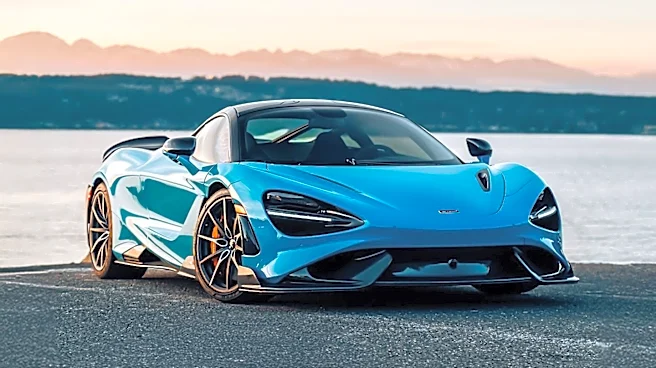
McLaren has officially announced its next series supercar, the McL 820, slated for release in 2027. This announcement marks a significant shift for the British brand, introducing a new naming convention designed to unify its automotive and racing divisions.
The 'McL' prefix is inspired by McLaren's motorsport heritage, while the '820' directly indicates the car's 820 PS (Pferdestärke) power output. The reveal was accompanied by the unveiling of a kiwi bird statue in central London, a nod to founder Bruce McLaren's New Zealand origins and a symbol used by the brand from 1964 to 1980. This new naming strategy aims to create a clearer connection between McLaren Automotive and its motorsport legacy, making performance specifications immediately identifiable from the vehicle's name. While the power output has been confirmed, other technical specifications such as engine configuration, electrification, torque, and acceleration remain undisclosed.
Why It's Important?
This strategic shift in McLaren's naming convention and product roadmap is significant for the luxury automotive market and the brand's competitive positioning. By unifying its automotive and racing identities through a consistent naming structure, McLaren aims to strengthen its brand image and appeal to enthusiasts who value its motorsport pedigree. The direct inclusion of power output in the model name, such as '820' for 820 PS, provides immediate clarity on performance, which can be a key differentiator in the high-performance supercar segment. This move could influence how other luxury car manufacturers approach product naming and branding, potentially leading to a trend of more transparent performance indicators in model designations. For consumers, it simplifies understanding the performance hierarchy within McLaren's lineup, while for the company, it reinforces its commitment to performance and heritage.
What's Next?
Further details about the McL 820 are expected to be released in the new year, which will likely include more comprehensive technical specifications, design elements, and potentially pricing information. The introduction of this new naming strategy with the McL 820 suggests that future McLaren models will follow a similar convention, creating a more cohesive and recognizable product line across both its road cars and racing vehicles. Industry observers will be keen to see how this new approach impacts McLaren's sales and brand perception, especially in a highly competitive market where innovation and heritage are key. The company's decision to use a historical symbol like the kiwi bird for the announcement also indicates a renewed focus on its foundational roots, which could be further explored in future marketing campaigns and brand storytelling.
Beyond the Headlines
The reintroduction of the kiwi bird symbol and the new naming strategy reflect a deeper effort by McLaren to reconnect with its heritage while signaling a forward-looking vision. This blend of tradition and innovation is crucial for luxury brands seeking to maintain authenticity and relevance. The unification of automotive and racing divisions under a single naming convention could also foster greater synergy in technological development and brand messaging, potentially leading to more direct transfers of racing technology into road cars. This strategic alignment might also influence McLaren's long-term sustainability goals, as the company navigates the transition towards electrification in the supercar segment. The McL 820, therefore, is not just a new car but a symbol of McLaren's evolving brand identity and its strategy to remain a leader in the high-performance automotive world.