


What's Happening?
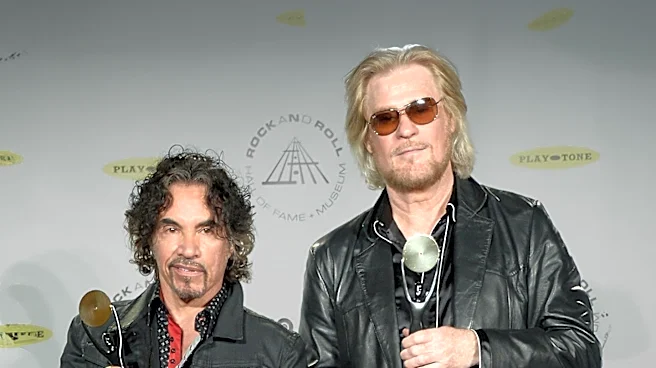
Phil Collins and Billy Idol were among the prominent artists inducted into the Rock and Roll Hall of Fame at a ceremony held in Los Angeles. Phil Collins, already a Hall of Fame member with Genesis, received a solo honor and delivered a tearful acceptance
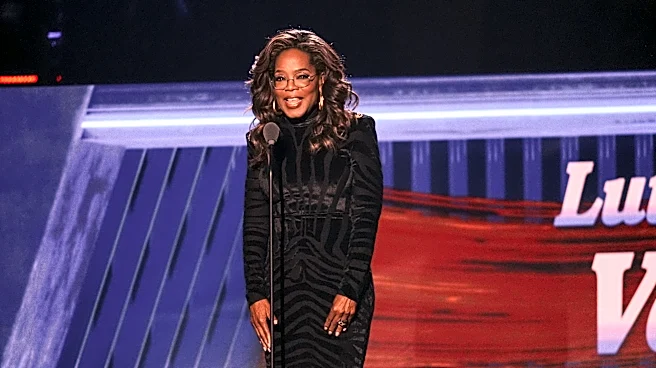
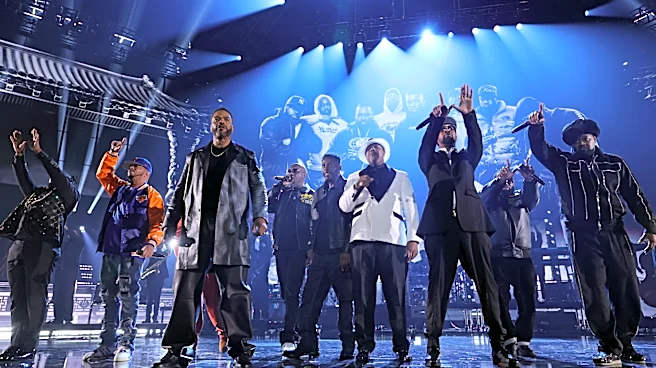
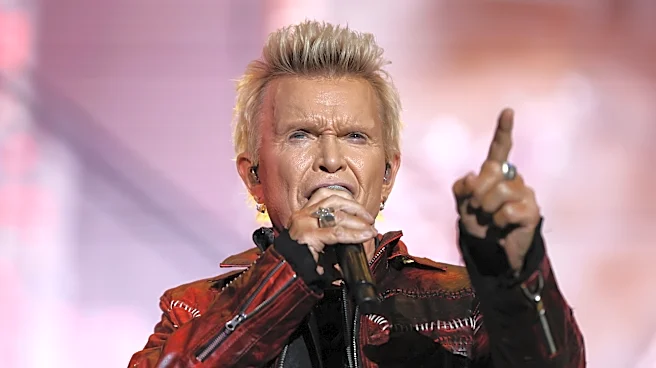
speech, followed by a tribute performance from Cynthia Erivo. Billy Idol's induction saw the crowd enthusiastically participate in his hit 'White Wedding,' and he performed with his longtime guitarist Steve Stevens, joined by Gwen Stefani and Tony Kanal of No Doubt. Other inductees included the late Luther Vandross, inducted by Oprah Winfrey, and the Wu-Tang Clan, who delivered a memorable performance. Queen Latifah and MC Lyte were also inducted, with Latifah acknowledging the challenges for women in hip-hop to reach such an honor. Producer Rick Rubin, Oasis, Iron Maiden, Joy Division/New Order, and Sade were also recognized.
Why It's Important?
The Rock and Roll Hall of Fame induction ceremony is a significant event in the music industry, recognizing artists who have profoundly influenced rock and roll and its various genres. The induction of diverse artists like Phil Collins, Billy Idol, Luther Vandross, and the Wu-Tang Clan highlights the broad scope and evolving definition of rock and roll, encompassing pop, R&B, and hip-hop. This event not only celebrates the careers of these musicians but also preserves their legacy for future generations. For the artists, it's a pinnacle of recognition, affirming their impact on music and culture. For fans, it's an opportunity to celebrate their idols and reflect on the music that has shaped their lives, often featuring unique performances and collaborations that become memorable moments in music history.
What's Next?
Following the induction ceremony, the newly honored artists will see their legacies further cemented within the annals of music history. Their music may experience renewed interest, leading to increased streaming, sales, and potential re-releases or special editions of their works. The Hall of Fame itself will continue its mission of preserving rock and roll history, with exhibits and archives reflecting the contributions of these inductees. For the artists, this recognition often leads to renewed touring opportunities, special appearances, or collaborative projects. The ceremony also sets the stage for future discussions and debates among music critics and fans about who will be considered for induction in subsequent years, maintaining the Hall of Fame's relevance and cultural impact.
Beyond the Headlines
Beyond the immediate celebration, the Rock and Roll Hall of Fame inductions spark broader conversations about musical genres, cultural influence, and the criteria for artistic recognition. The inclusion of hip-hop artists like Wu-Tang Clan, Queen Latifah, and MC Lyte continues to challenge traditional definitions of 'rock and roll,' reflecting the genre's evolution and its interconnectedness with other forms of popular music. This ongoing expansion acknowledges the diverse sounds and artists that have shaped contemporary music. The ceremony also serves as a cultural touchstone, bringing together generations of musicians and fans, and highlighting the enduring power of music to transcend boundaries and connect people. It underscores the idea that music is a living, evolving art form, constantly being redefined by new voices and styles.