





What's Happening?
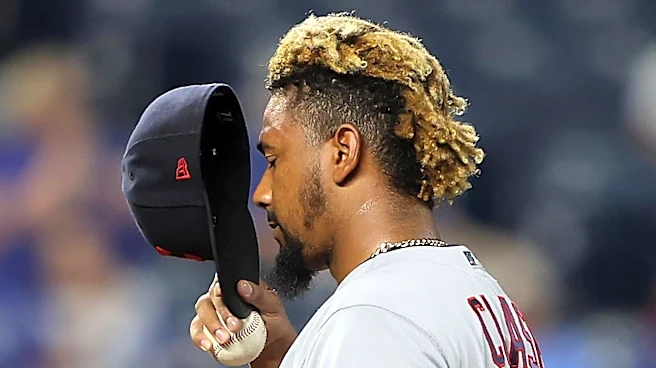
In a federal trial in Brooklyn, the defense for Dominican pitcher Emmanuel Clase is challenging the prosecution's interpretation of text messages presented as evidence. The prosecution alleges that references to 'gallos' (roosters) and 'pollos' (chickens)
in Clase's messages were coded signals to bettors regarding his pitching performance. However, Clase's defense argues that these conversations were actually about cockfighting, aiming to cast doubt on the prosecution's claims. During the interrogation of an FBI agent, the defense questioned the ability to interpret these messages without their full context. The prosecution, conversely, has presented conversations and betting records on specific pitches to support its theory. Clase and fellow Dominican pitcher Luis Ortiz face federal charges of conspiracy related to electronic fraud, sports bribery, and money laundering, to which both have pleaded not guilty. The trial is ongoing in Brooklyn.
Why It's Important?
This trial holds significant importance for the integrity of professional sports, particularly Major League Baseball (MLB), as it addresses allegations of game manipulation and sports bribery. If proven, such actions could severely damage public trust in the fairness of baseball and other professional leagues. The outcome could lead to stricter regulations and oversight within sports to prevent similar incidents. For athletes, a conviction could result in severe penalties, including lengthy bans from the sport and criminal charges, impacting their careers and reputations. The case also highlights the increasing scrutiny of digital communications in legal proceedings, as prosecutors and defense teams grapple with interpreting informal language and slang in a court of law. The involvement of an FBI agent underscores the federal government's commitment to prosecuting cases that undermine the integrity of major U.S. institutions, including professional sports.
What's Next?
The federal trial against Emmanuel Clase and Luis Ortiz is continuing in Brooklyn. The defense will likely continue to present arguments and evidence to counter the prosecution's interpretation of the text messages and other digital evidence. The prosecution will aim to solidify its case by presenting further evidence, including testimony from key witnesses like catcher Bo Naylor, who has already testified. The jury will ultimately need to weigh the evidence and arguments from both sides to determine whether the messages constitute coded signals for betting or refer to an unrelated activity like cockfighting. The verdict will have immediate consequences for Clase and Ortiz, potentially leading to convictions, sentencing, or acquittal. Beyond the immediate legal outcome, the trial's conclusion could prompt MLB and other sports organizations to review and enhance their policies regarding player conduct, gambling, and the use of digital communication.
Beyond the Headlines
The trial of Emmanuel Clase delves into the complex intersection of technology, language, and legal interpretation. The dispute over the meaning of 'gallos' and 'pollos' highlights the challenges of using informal digital communication as evidence, where context and cultural nuances can significantly alter meaning. This case could set precedents for how digital slang and coded language are treated in future legal battles, particularly in cases involving alleged illicit activities. Furthermore, the trial brings to light the persistent issue of gambling's influence on professional sports, even with stringent rules in place. It underscores the ethical dilemmas faced by athletes and the potential for external pressures to compromise sporting integrity. The outcome may also influence how sports leagues educate their players about the risks associated with gambling and the importance of maintaining transparency in their communications, especially in an era where digital footprints are easily traceable and subject to legal scrutiny.