








What's Happening?
Crude oil prices are anticipated to decline to a range of $75-$85 per barrel next year, as the global oil market is expected to move into a surplus. This forecast comes from Iman Nasseri, Senior VP – Middle East & Asia at FGE NexantECA. Nasseri indicates
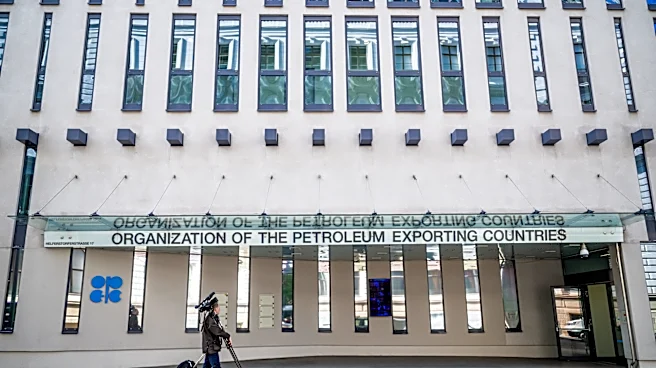
that global demand for crude has already peaked, while additional supply is projected to enter the market. This situation is expected to prompt the Organization of the Petroleum Exporting Countries (OPEC) to intervene with production cuts. Currently, the market finds support around $90-$95 per barrel, with the near-term fair value for crude estimated at $85-$95 per barrel. Prices are expected to soften as inventories increase and supply improves. FGE NexantECA has revised its demand outlook, now believing that global crude oil demand peaked in 2025, earlier than its previous estimate of 2027. The firm suggests that biofuels, natural gas liquids, and other alternatives are increasingly meeting global fuel demand. Underutilized refinery capacity in the Middle East, Russia, and China is also contributing to the current market imbalance.
Why It's Important?
This projected decline in crude oil prices and the anticipated market surplus carry significant implications for the U.S. economy and its energy sector. Lower oil prices could translate to reduced fuel costs for consumers and businesses, potentially easing inflationary pressures and boosting economic activity. Industries heavily reliant on oil, such as transportation and manufacturing, could see decreased operational costs, leading to higher profit margins or more competitive pricing. However, U.S. domestic oil producers might face challenges, as lower prices could reduce profitability and potentially slow down investment in new drilling and exploration. The expected intervention by OPEC through production cuts highlights the cartel's continued influence on global oil markets, which can impact U.S. energy policy and strategic reserves. The shift in global demand, with alternatives increasingly meeting fuel needs, signals a broader trend towards energy transition, which could accelerate investments in renewable energy sources within the U.S. and affect the long-term viability of fossil fuel industries.
What's Next?
The forecast assumes that OPEC will take action during the second quarter of next year by reducing production to manage the anticipated surplus. This intervention will be a critical factor in determining the actual price trajectory of crude oil. Market participants will closely monitor OPEC's decisions and announcements regarding production quotas. Furthermore, the normalization of product prices is expected to begin by the middle of next year and continue into the second half, which could further influence the broader energy market. Shipping disruptions through the Strait of Hormuz are also expected to gradually ease, with the region moving towards a 'new normal' by the end of next year as alternative export infrastructure develops and geopolitical risks moderate. These developments will collectively shape the global oil supply chain and pricing environment, impacting U.S. energy imports and domestic production strategies. The continued growth of biofuels and natural gas liquids will also be a key area to watch, as their increasing market share could further reduce reliance on crude oil.
Beyond the Headlines
The projected peak in global crude oil demand in 2025, two years earlier than previously estimated, signifies a potentially accelerated shift in global energy consumption patterns. This trend could have profound long-term implications for the U.S. energy landscape, pushing for faster decarbonization efforts and increased investment in sustainable energy technologies. The underutilization of refinery capacity in key regions like the Middle East, Russia, and China suggests a structural imbalance in the refining sector, which could lead to consolidation or strategic shifts in global refining operations. For the U.S., this might mean a re-evaluation of its own refining capacity and export strategies. The easing of shipping disruptions and geopolitical risks in critical oil transit regions could stabilize global supply chains, but also potentially reduce the geopolitical premium often embedded in oil prices. This could lead to a more competitive global oil market, requiring U.S. producers to enhance efficiency and innovation to remain viable.