









What's Happening?
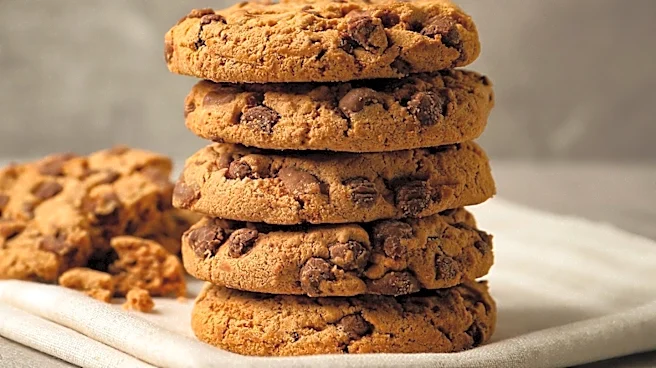
Crumbl Cookies, a viral U.S. bakery chain, has implemented a unique business model that features a rotating weekly menu of six oversized cookies. This strategy has led to a significant shift in consumer behavior, where customers often purchase the entire
set of cookies rather than selecting individual flavors. This phenomenon is attributed to the psychological impact of limited choices, which reduces decision fatigue and increases consumer satisfaction. The concept of a rotating menu not only creates anticipation but also leverages the fear of missing out (FOMO), encouraging consumers to buy all available options. This approach aligns with the findings of psychologist Barry Schwartz, who argued that too many choices can lead to decision paralysis and decreased satisfaction.
Why It's Important?
The strategy employed by Crumbl Cookies highlights a broader trend in consumer behavior where less choice can lead to higher conversion rates. By limiting options, Crumbl reduces consumer overwhelm and taps into the social aspect of consumption, where owning the complete set becomes a shared experience. This model is not only applicable to the food and beverage industry but also extends to other sectors, as seen with brands like Levi's and Stanley, which have successfully used limited editions and curated selections to boost sales. The success of this approach suggests that brands can benefit from focusing on curated experiences and exclusivity to foster consumer loyalty and increase sales.
What's Next?
As more brands recognize the benefits of limited choice and exclusivity, it is likely that similar strategies will be adopted across various industries. Companies may increasingly focus on creating curated product lines and limited editions to drive consumer engagement and build brand loyalty. This shift could lead to a reevaluation of traditional marketing strategies, with an emphasis on creating experiences that extend beyond the initial purchase. Brands that successfully implement these strategies may not only see increased sales but also develop a community of loyal customers who value the experience of owning a complete set.
Beyond the Headlines
The trend towards limited choice and exclusivity raises questions about consumer autonomy and the role of marketing in shaping purchasing decisions. While reducing options can alleviate decision fatigue, it also places greater power in the hands of brands to dictate consumer behavior. This dynamic highlights the ethical considerations of marketing strategies that prioritize sales over consumer choice. Additionally, the emphasis on social media relevance and FOMO as drivers of consumption reflects broader cultural shifts towards performative consumption and the desire for social validation.