







What's Happening?
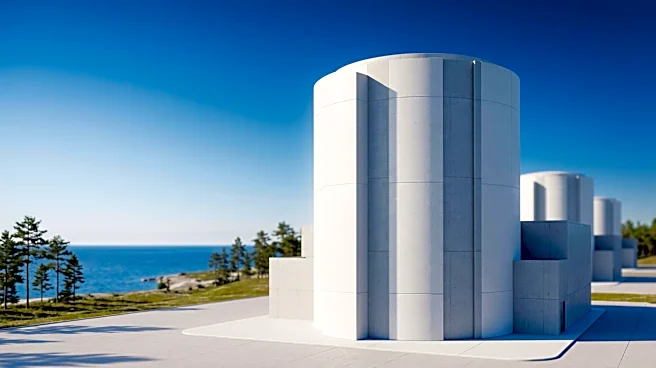
Studsvik AB, in collaboration with GE Vernova Hitachi Nuclear Energy and Samsung C&T, has announced plans to develop four BWRX-300 reactors in Sweden. This initiative, which also includes GE Vernova Financial Services and Seoul-based DS Investment Partners,
aims to establish approximately 1,200 megawatts of nuclear power, with the first unit targeted for operation by the mid-2030s. The BWRX-300 is a simplified boiling water reactor design, approximately 300 megawatts in size, that operates without electric recirculation pumps, relying instead on natural circulation driven by heat and gravity. A key design modification involves the removal of safety relief valves, historically a leading cause of loss-of-coolant accidents in this reactor family, replacing them with three isolation condensers. These condensers are designed to passively manage decay heat for up to a week without human intervention. This project signifies a multinational effort, combining American and Japanese reactor design, Korean construction expertise, and Swedish ground. Studsvik's CEO, Karl Thedéen, emphasized the ambition to industrialize small modular reactor construction, stating, 'One reactor is a project. Four is the start of an industry.'
Why It's Important?
This development holds significant implications for the global nuclear energy landscape, particularly for the U.S. and its allies. The involvement of GE Vernova, an American company, in a project aiming to industrialize small modular reactor (SMR) construction could provide a blueprint for future nuclear energy deployment in the U.S. and other nations. The BWRX-300's simplified design, which enhances passive safety features and reduces reliance on active components, could address some of the historical concerns regarding nuclear plant safety and operational complexity. If successful, this project could significantly lower the cost of new nuclear power through serial manufacturing, making nuclear energy a more competitive option for electricity generation. This could contribute to energy independence and decarbonization efforts in the U.S., offering a reliable, carbon-free power source. Furthermore, the project's multinational collaboration demonstrates a model for international partnerships in advanced nuclear technology, potentially fostering greater global cooperation in addressing climate change and energy security challenges. The U.S. Nuclear Regulatory Commission is already reviewing a construction permit application for a BWRX-300 unit at Clinch River by the Tennessee Valley Authority, indicating direct relevance to U.S. energy policy and infrastructure.
What's Next?
The immediate next steps involve the formation of a joint project company and the finalization of definitive agreements, as the current announcement is not a final investment decision and does not authorize construction. Studsvik has also applied for state support from the Swedish government, covering up to 1,400 megawatts, and negotiations over terms have not yet begun. Any final financial package will require Swedish approvals and, where applicable, European Commission clearance under EU state aid rules. The project will also need to select a specific site between Nyköping, where Studsvik already holds a nuclear license, and Målma, a greenfield site at Valdemarsvik. The progress of the BWRX-300 project in Ontario, Canada, where Ontario Power Generation is already building one, and the ongoing review by the U.S. Nuclear Regulatory Commission for a unit at Clinch River, will serve as important benchmarks and potential accelerators for the Swedish initiative. The success of these early deployments will likely influence the pace and scale of future BWRX-300 projects globally, including in the U.S.
Beyond the Headlines
The Studsvik project represents a deeper shift in the approach to nuclear energy development, moving beyond large, bespoke power plants towards standardized, factory-built small modular reactors. This 'industrialization' strategy, as articulated by Studsvik's CEO, could fundamentally alter the economics and deployment timelines of nuclear power. By simplifying designs and leveraging passive safety systems, the BWRX-300 aims to reduce both construction costs and operational risks, potentially making nuclear energy more palatable to a broader range of countries and investors. The project also highlights the evolving role of former nuclear research sites, with Studsvik, historically involved in dismantling reactors, now aiming to host new ones. This transition underscores a broader trend of repurposing existing nuclear infrastructure and expertise for advanced reactor deployment. The multinational nature of the collaboration—involving American, Japanese, Korean, and Swedish entities—suggests a growing international consensus on the need for advanced nuclear solutions and a willingness to pool resources and expertise to achieve them. This could lead to a more interconnected global nuclear supply chain and shared regulatory frameworks, ultimately accelerating the transition to cleaner energy sources worldwide.