






What's Happening?
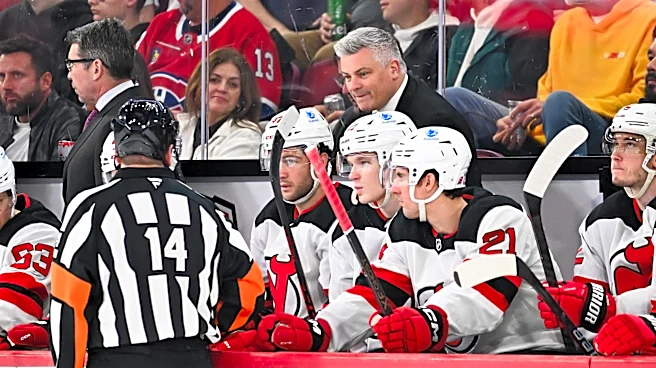
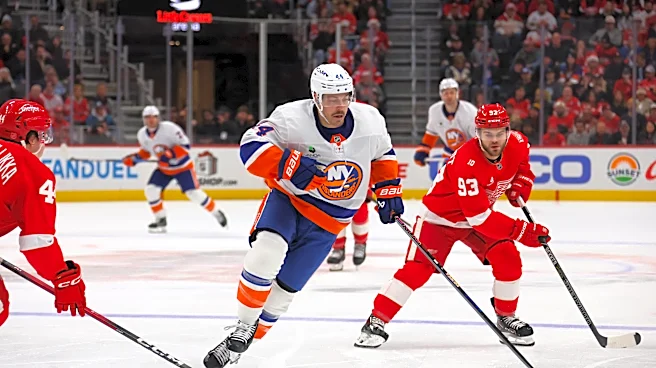
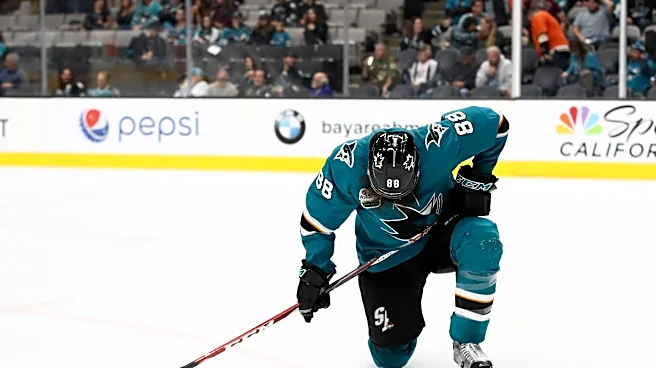
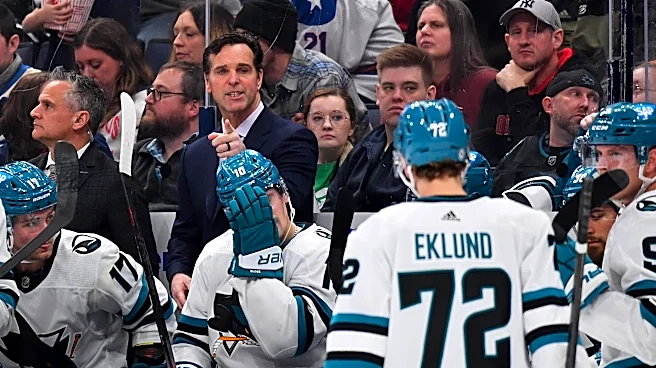
During a recent NHL game between the Seattle Kraken and the San Jose Sharks, a coach's challenge initiated by San Jose successfully overturned a delay of game penalty assessed to Jacob Trouba. The penalty was initially called under Rule 63.2 (iii) for
shooting the puck out of play from the defending zone. However, after a video review, it was determined that Trouba’s shot deflected off Bobby McMann’s stick before exiting the playing area. This decision was made in accordance with Rule 38.2 (d), which allows for a coach's challenge in such situations if the puck is determined to have deflected off a player, stick, glass, or boards. The original call on the ice was rescinded, highlighting the impact of video review in ensuring accurate penalty calls in professional hockey.
Why It's Important?
This incident underscores the critical role of the coach's challenge system in maintaining fairness and accuracy in NHL games. The successful challenge prevented a potentially game-altering penalty from being incorrectly applied, which could have given the opposing team a power play opportunity. Such calls can significantly influence game momentum and outcomes, especially in tightly contested matches. For players, it means that subjective judgment calls by officials can be reviewed and corrected, reducing the risk of unfair penalties. For teams, it provides a strategic tool to contest calls that they believe are incorrect, ensuring that the rules are applied precisely. This mechanism helps uphold the integrity of the sport and ensures that game results are determined by on-ice performance rather than officiating errors.
What's Next?
The successful application of the coach's challenge in this scenario reinforces its continued use and importance in the NHL. Teams will likely continue to utilize this rule strategically to contest penalties, particularly those involving pucks going out of play from the defensive zone. The league will continue to rely on video review technology to make conclusive and irrefutable determinations, as outlined in Rule 38.1. This ongoing reliance on technology and the challenge system will likely lead to fewer incorrect penalty calls and a more consistent application of the rules across all games. Future games will undoubtedly see similar challenges, further solidifying the role of video review in modern hockey.
Beyond the Headlines
The use of video review and coach's challenges in professional sports, as exemplified by this NHL incident, reflects a broader trend towards integrating technology to enhance fairness and accuracy. While it introduces brief stoppages in play, the benefit of correcting erroneous calls is often seen as outweighing the disruption. This technological integration raises questions about the evolving role of human officials versus automated systems in sports. It also highlights the increasing pressure on leagues to ensure transparency and accountability in officiating. The balance between maintaining the flow of the game and ensuring precise rule enforcement will continue to be a key consideration for sports organizations as technology advances.