



What's Happening?
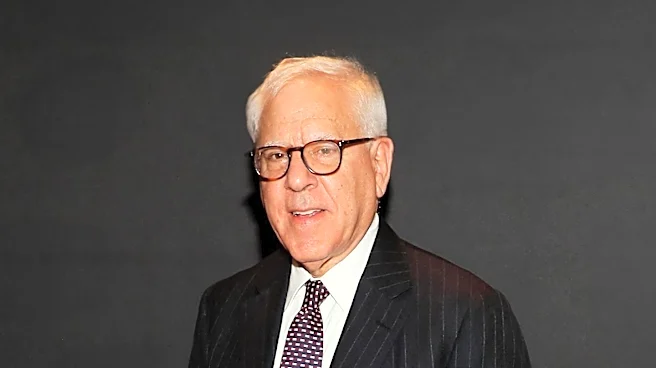
David Rubenstein is recognized as a co-founder of The Carlyle Group, a prominent global alternative asset manager. The firm, which he established alongside William E. Conway Jr. and Daniel A. D’Aniello, has evolved significantly from its origins as a small
private equity partnership into one of the largest global alternative asset managers. The Carlyle Group's investment strategies are diverse, encompassing private equity, real assets (such as real estate and infrastructure), global credit, and investment solutions. Headquartered in Washington, D.C., and founded in 1987, Carlyle raises and manages investment funds that acquire, operate, and exit companies and assets on behalf of institutional and private investors. The firm is publicly traded on the Nasdaq exchange and functions as an asset manager and investment advisor.
Why It's Important?
The Carlyle Group's extensive operations and diverse investment portfolio highlight its significant influence on global financial markets and various industries. As a major player in alternative asset management, its investment decisions can impact the growth and strategic direction of numerous companies across different sectors. The firm's focus on private equity, real assets, and global credit means it plays a crucial role in capital allocation, corporate restructuring, and infrastructure development. Its client base, which includes pension funds, sovereign wealth funds, and insurance companies, underscores its importance in managing substantial capital that affects retirement savings and institutional investments. The firm's global presence also means its activities have far-reaching economic implications, influencing market trends and investment opportunities in both developed and emerging markets.
What's Next?
The Carlyle Group is expected to continue adapting its strategies and product offerings to meet evolving investor demands across credit, real assets, and private markets. This ongoing evolution will likely involve further diversification of its investment vehicles and a continued focus on sourcing and executing private equity buyouts, growth investments, and credit solutions. The firm's commitment to active portfolio management and operational improvement of its portfolio companies suggests a sustained effort to maximize returns for its investors. Future developments may also include strategic sales or public offerings of its acquired assets, which could generate significant market activity. The firm's global operational model, with regional investment teams, indicates a continued pursuit of investment opportunities worldwide, responding to geopolitical and economic shifts.
Beyond the Headlines
Beyond its financial impact, David Rubenstein's involvement extends to significant cultural and educational initiatives, such as the David Rubenstein Atrium at the Lincoln Center. This highlights a broader trend among successful business leaders to engage in philanthropy and support public institutions. Such contributions can have a profound societal impact by providing accessible cultural programming and fostering community engagement. The Atrium, for instance, offers free performances, artistic panels, and workshops, making arts and culture more inclusive. This dual role of a financial titan and a cultural benefactor illustrates how private wealth can be leveraged to support both economic growth and public good, influencing not only financial landscapes but also the social and cultural fabric of communities.