







What's Happening?
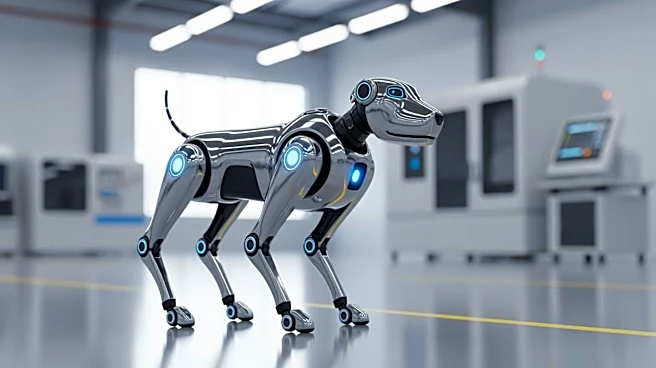
Robot dogs are increasingly being used in manufacturing facilities to improve safety and operational efficiency. These quadruped robots, such as Boston Dynamics' Spot, are designed to navigate spaces built for human movement, making them ideal for inspection
and monitoring tasks in areas that are difficult or hazardous for humans to access. Equipped with cameras and sensors, robot dogs collect data and provide a consistent view of conditions across a site. This technology supports digital transformation by enhancing visibility and allowing human workers to focus on analysis and decision-making.
Why It's Important?
The adoption of robot dogs in manufacturing represents a significant advancement in industrial robotics. By improving safety and operational insight, these robots help reduce the risk of accidents and enhance productivity. They allow for more efficient monitoring of large and complex facilities, such as those in maritime and process manufacturing. The use of robot dogs also encourages manufacturers to explore digital readiness, integrating new technologies without significant disruption. This shift towards automation and digitalization is crucial for maintaining competitiveness in the global manufacturing industry.
What's Next?
As robot dogs become more prevalent, manufacturers will need to address challenges related to network coverage, data integration, and sensor selection. The technology is expected to evolve, with increased payload capacities and more intuitive software interfaces. Manufacturers may explore further customization of these robots to address specific operational challenges. The continued development and deployment of robot dogs could lead to broader adoption of mobile robotics in various industrial sectors, driving innovation and efficiency.
Beyond the Headlines
The integration of robot dogs into manufacturing processes raises questions about the future of work and the role of human workers. While these robots enhance safety and efficiency, they also prompt discussions about job displacement and the need for workforce reskilling. The ethical implications of increased automation and data collection must be considered, particularly in terms of privacy and data security. As the technology advances, it will be important to balance the benefits of automation with the social and ethical considerations it presents.