





What's Happening?
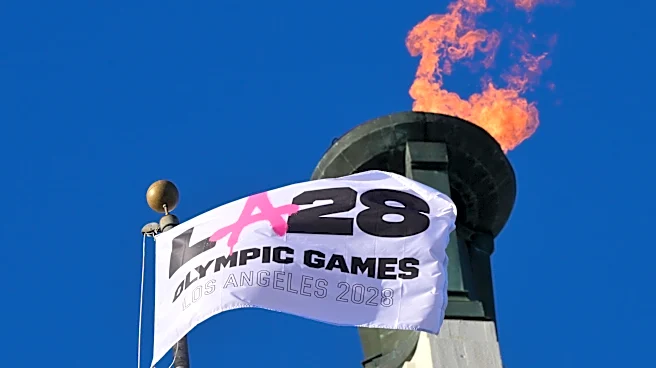
Los Angeles city officials have formally requested that the organizers of the 2028 Summer Olympics, LA28, secure a $650-million event cancellation insurance policy and agree to cover any losses exceeding that amount. City Administrative Officer Matt Szabo
communicated this request to LA28, citing that such protection has been standard for most Olympic Games since 2004, following the 2001 terrorist attacks in the U.S. The city's demand comes amidst broader concerns from City Council members regarding LA28's financial transparency, particularly its failure to publicly disclose contracts worth $1 million or more in recent annual reports, a requirement under their 2021 agreement. Council President Marqueece Harris-Dawson described the lack of transparency as 'troubling' and a threat to the relationship between the city and Olympic organizers.
Why It's Important?
This development is crucial for the financial security and public accountability of the 2028 Los Angeles Olympics. The request for enhanced insurance aims to protect the city from potential financial devastation should unforeseen events like natural disasters, health emergencies, or terrorist threats lead to the cancellation or significant disruption of the Games. The experience of the Tokyo 2020 Olympics, which incurred substantial losses due to the COVID-19 pandemic despite having a $650-million policy, underscores the necessity of robust insurance. Furthermore, the dispute over financial disclosures highlights a critical governance issue: ensuring transparency and public trust in large-scale public-private partnerships. The city's insistence on publicizing contracts is vital for oversight, preventing potential conflicts of interest, and ensuring that local businesses, particularly those in Los Angeles, receive a fair share of opportunities.
What's Next?
LA28 is expected to respond to the city's request for enhanced insurance and increased financial transparency within 30 days, as stipulated by their Games Agreement. The City Council will likely continue to press for the public disclosure of contracts, potentially exploring what leverage they have to enforce the 2021 agreement. Discussions will also continue regarding LA28's commitment to awarding contracts to Los Angeles-based businesses, a point of contention raised by Council President Harris-Dawson. The outcome of these negotiations will determine the financial safeguards for the 2028 Olympics and the level of public accountability for its organizers. Failure to reach an agreement on these issues could strain the relationship between the city and LA28, potentially impacting the planning and execution of the Games.
Beyond the Headlines
The ongoing discussions between Los Angeles city officials and LA28 reveal the inherent complexities and potential friction points in hosting mega-events like the Olympics. Beyond the immediate financial and contractual disputes, this situation touches upon broader themes of urban development, economic equity, and the balance of power between public entities and private organizing committees. The city's push for transparency and local business engagement reflects a growing demand for mega-events to deliver tangible benefits to host communities and operate with greater accountability. The insurance debate also highlights the increasing global risks, from pandemics to climate-related disasters, that now factor into the planning of such large-scale international gatherings, necessitating more comprehensive risk management strategies and financial protections.