






What's Happening?
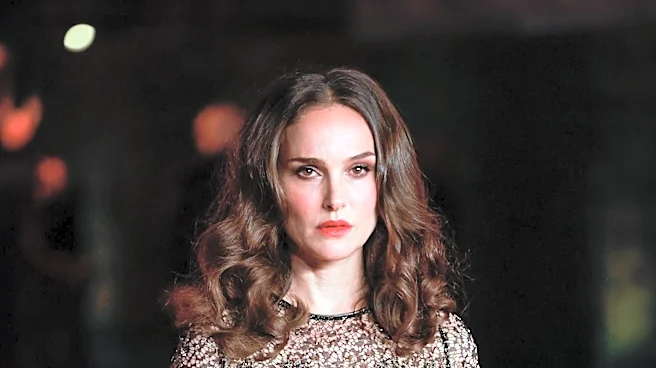
Natalie Portman, in a recent interview with Harper's Bazaar, discussed her experiences as a child star, particularly the sexualization she faced after films like 'Léon: The Professional'. To counter this, Portman, with her parents' guidance, deliberately
cultivated an image of a serious, intelligent, and well-behaved girl. This strategy involved choosing age-appropriate outfits for red carpet events and prioritizing her education and academic achievements. She explained that this was a conscious effort to assert, 'No, I am serious, I am a good girl, I am prudish, I am smart, I am a student,' emphasizing it as a protective mechanism. Portman noted that this carefully constructed image has, to some extent, persisted, leading people to perceive her as overly serious, despite her self-description as silly and someone who loves to laugh. She also addressed the misconception that she is a perfectionist, attributing it to her role in 'Black Swan', and stating she is quite the opposite.
Why It's Important?
Portman's candid reflections shed light on the pressures faced by child actors in the entertainment industry, particularly concerning public perception and sexualization. Her proactive approach to managing her public image highlights the agency some individuals attempt to exert over their careers from a young age. This narrative is significant for understanding the long-term impact of early fame on personal identity and professional trajectory. It also underscores the societal tendency to pigeonhole public figures based on initial impressions or specific roles, often overlooking their multifaceted personalities. For aspiring young performers and their families, Portman's experience serves as a cautionary tale and a strategic blueprint for navigating the complexities of celebrity, emphasizing the importance of self-preservation and intentional image-building in a demanding industry.
Beyond the Headlines
Portman's discussion extends beyond her personal experience to touch upon broader cultural issues regarding the sexualization of minors in media and the subsequent challenges in reshaping public perception. Her deliberate construction of an 'intellectual' persona can be seen as a form of resistance against objectification, a strategy that many female public figures have employed to gain respect and control over their narratives. This approach, while successful in establishing her as a serious actress, also reveals the double-edged sword of such efforts, as the constructed image can become difficult to shed. The interview implicitly raises questions about the responsibility of media and audiences in shaping and perpetuating stereotypes, particularly for those who enter the public eye at a vulnerable age. Her story contributes to the ongoing dialogue about gender, age, and power dynamics within Hollywood and society at large.