






What's Happening?
Diversified LLC has provided a detailed explanation of the self-employed 401(k), also known as a solo 401(k) or individual 401(k), designed for small business owners without employees, excluding a spouse. This retirement savings plan allows individuals
to act as both employer and employee, making contributions from pre-tax income for tax-deferred growth. For 2026, employee contributions can be up to $24,500 or 100% of compensation, with an additional $8,000 catch-up contribution for those aged 50 and above. As an employer, individuals can contribute up to 25% of their compensation annually. The combined contribution limit for 2026 is $72,000, or 100% of salary, whichever is lower, potentially increasing to $80,000 or $83,250 for those making catch-up contributions in specific age brackets.
Why It's Important?
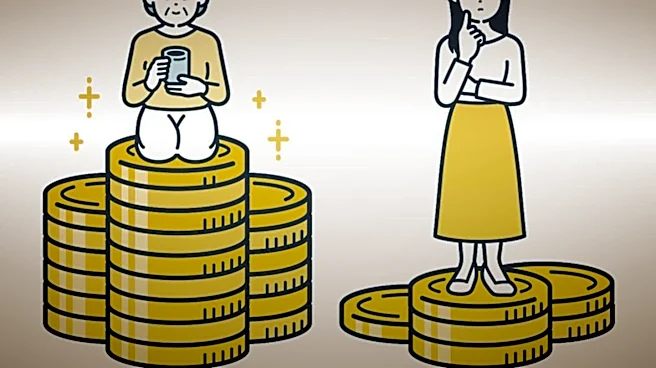
The self-employed 401(k) is a critical tool for U.S. small business owners and independent contractors, offering significant tax advantages and high contribution limits that can substantially boost retirement savings. Unlike traditional IRAs, the dual contribution structure allows for much larger annual contributions, which is particularly beneficial for individuals with fluctuating incomes. The tax-deferred growth means taxes are only paid upon withdrawal in retirement, allowing investments to compound more effectively. This plan helps level the playing field for self-employed individuals, providing a retirement savings vehicle comparable to those available in larger corporate settings, thereby promoting financial security for a vital segment of the U.S. economy.
What's Next?
Setting up a self-employed 401(k) involves choosing a financial institution that specializes in administering these plans, considering fees and diverse investment options. Ongoing management requires regularly reviewing investment choices and adjusting contribution levels based on business performance. Withdrawals are typically allowed upon reaching age 59½, disability, or plan termination, with early withdrawals potentially incurring a 10% penalty plus income taxes. Required Minimum Distributions (RMDs) begin at age 73. The plan also offers flexibility for rollovers from other retirement accounts and can be transitioned to a standard 401(k) if the business hires employees. Maintaining detailed records of contributions and investments is crucial for compliance and effective management.
Beyond the Headlines
The self-employed 401(k) reflects a broader trend in the U.S. economy towards entrepreneurship and independent contracting. As more individuals opt for self-employment, robust retirement savings options like the solo 401(k) become essential for their financial well-being and for reducing future reliance on public assistance programs. The generous contribution limits and tax benefits incentivize self-employed individuals to save aggressively, which can have a positive ripple effect on the economy by fostering greater financial stability among small business owners. The flexibility in managing contributions and investments also empowers individuals to tailor their retirement strategy to their unique business cycles and personal financial goals, highlighting the evolving nature of work and retirement in the modern era.